All Great Photos Have This (How to Tell a Story in Photography)
Photography Basics
Composition, light and color all matter because they build up to something bigger: story. Here's how storytelling in photography works, and how to tell better stories with your photos.
·
11 min read

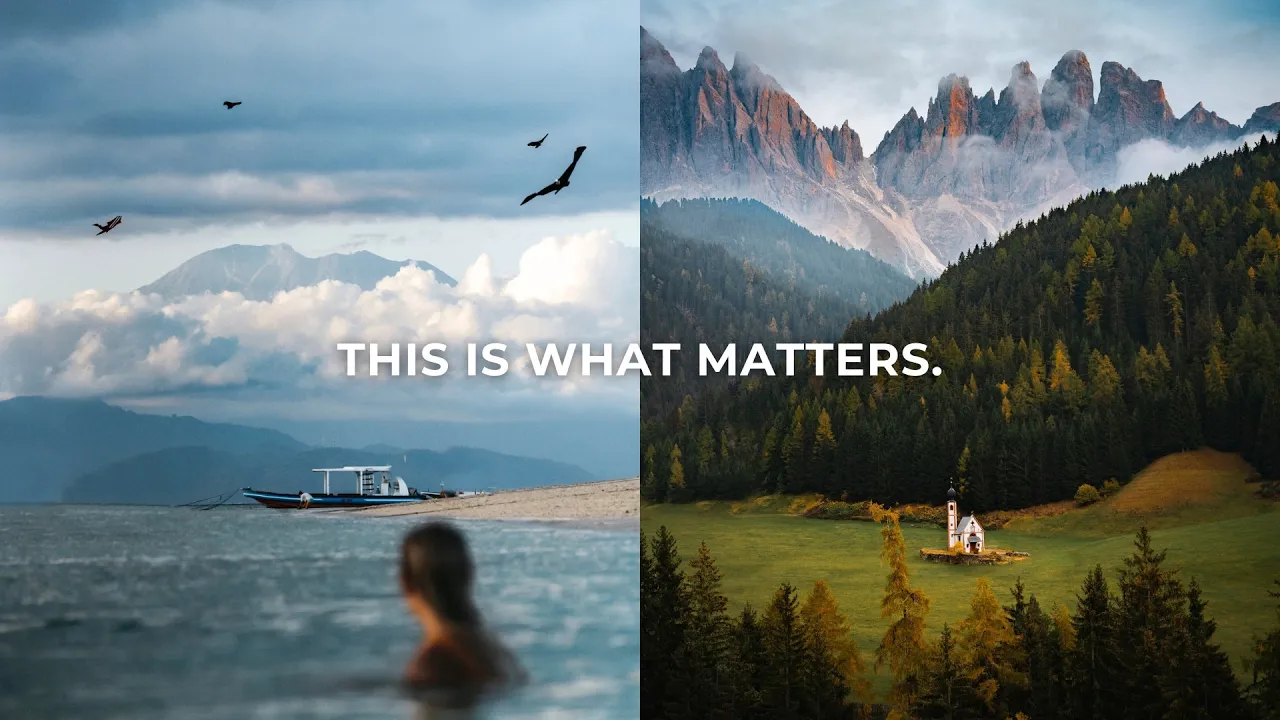
If I asked you what the most important thing in a photo is, what would you say? Maybe a strong composition, interesting subject matter, dramatic lighting or vivid colors. And you'd be right. But not because those things make an image visually beautiful. It's because they all add up to something much more important: story.
Story is emotion in photography. It's what lets your viewer feel a deeper connection with your image, and it's a starting point for their imagination to explore the scene even further. It's without a shadow of a doubt the single most important factor in photography. So in this post, I'm breaking down storytelling in photography: what story actually is, the things that contribute to it, and a bunch of practical tips for telling deeper, more meaningful stories with your work. Let's go!
READ OR WATCH: This blog post is also available in video form! If you'd rather watch me explain this content, simply watch the video below. Otherwise you can find the text guide below. Just keep scrolling!
In All great photos have this, I break down the story in a bunch of my own photos.
What is story in photography?
In short, story is the emotion, meaning or message a photo conveys. It's what makes an image feel alive, and it invites the viewer to connect, imagine or feel something beyond the frame.

One of the biggest misconceptions about storytelling in photography is that a photo needs a grand narrative to have a story, with multiple subjects interacting to tell a very clear story about a specific moment in time. The greatest photos of all time often do have that, because they depict significant moments in history.
But a story can be so much simpler. It can be a feeling, an emotion or a message. It can be a slight warm tint that gives a photo a sense of nostalgia, or muted colors that give it a more subdued, moody look. It can even be found in abstract images, like rigid geometric lines that create a sense of order and structure, or the soft glow of light reflecting off the ocean. If your photo makes your viewer feel something, that's the story.
Ultimately, story is a combination of all the stylistic elements of photography (lighting, composition, subject matter and color) and how they come together to convey an emotion or feeling. So let's break those down.
Subject matter
Subject matter, the physical things in your photo, is the basis of story in photography. If you look back at the greatest photos of all time, the subject matter is often the driving force of the story, and those images are so powerful largely because they use humans to convey their message.
Use people. This is one of the easiest ways to tell more meaningful stories. As human beings, we relate to one another, so having a person in your photo makes it so much easier to relate to. A person's expression almost forces the viewer to feel the same thing. It's kind of a cheat code. If they look excited or energetic, we attribute those emotions to the photo. If they look sad or melancholy, we do the same.
Even without someone's face, you can bring in a human element. A hand in a still life photo humanizes it a little. A person in a landscape gives a visual sense of scale and makes it easier for the viewer to feel like they're actually standing there. I always try to have a person in my landscape photos, for exactly that reason.

Every object has an emotional connection. We obviously take a lot of photos without people, so we can't always use that cheat code. But every object in our lives has some kind of emotional connection to us. A cup of coffee might make someone feel warm, cozy or nostalgic, because it reminds them of a trip to Switzerland where they stayed in a beautiful chalet. A misty forest might feel mysterious or somber. A small cabin in the mountains might feel peaceful or cozy. Being mindful of every object in your shot, and deciding whether to include or leave it out, can really enhance your story.
Add a prop. This is especially relevant if you're putting together your own shoot and can control most of the variables. Sometimes a simple prop massively helps the story. A few years ago I did a brand shoot on a beach in Bali, and we needed something to anchor the shoot and give it the feeling of an adventure along the Balinese coast. We picked an old Land Rover. If it was just the two models standing on the beach, the photos would still look cool. But the Land Rover ties it all together and tells a much more interesting story of a couple cruising along the coast and stopping to watch the sunset.

Match the location to the story. If you're planning something like a portrait shoot, nothing makes the story fall apart faster than a mismatch between the location and the subject. That's exactly why brands spend so much money sending photographers to epic locations: those locations match the story of the brand.
Notice the small things. Of course, you can't always control everything in your scene, especially in street photography. But just being aware that every object carries emotion helps you approach your photography differently, and you'll notice shots you might otherwise miss. All I really remember about shooting Coney Island last winter is how horrifically cold it was. But this photo would absolutely suck without that woman's hand pressing against the glass. It adds so much to the story and makes the image a lot more powerful.

Color
Just like subject matter, color is highly associated with emotion. Color is one of the biggest driving factors in the story of my photos. Every color is associated with an emotion. That depends a little on your cultural background, but generally speaking, certain emotions go with certain colors, and using specific colors in your scene can greatly enhance your story. (I go much deeper on this in my post on color theory for photographers.)
We run into the same problem as with subject matter: in street or landscape photography, you can't always control the colors in your scene. If you're putting together your own shoot, you'll have more control. But I'd argue the editing phase is where the magic really happens with color. Lightroom gives us immense control over the colors in our photos, so you can take a photo that feels boring at first and completely enhance its story by adding, subtracting or shifting colors.
Nostalgic and warm. I shot this photo on the California coast, and it was already beautiful because the subject matter is fascinating, with these birds flying across the frame. But I knew I could enhance the story with color, so I edited it in a film style, going for colors that look like Portra 400. It gives the image so much more of a nostalgic, warm, timeless feeling. (I edited it with the Warm Portrait preset from my free preset pack.)

Lonely and somber. In the foggy forests of Madeira, Portugal, I really wanted to capture a lonely, isolated, somber vibe, so I leaned into the blues and let them carry the emotion.

Dramatic and inviting. This is a portrait I shot in Bali in 2020. It was a beautiful photo, but it felt a little cold and lacked something, so I really enhanced the warmth and saturation to make it look a lot more dramatic, inviting and interesting.

I always spend so much time on color in my edits, because I think it's a defining feature of my work. But color is very nuanced, and you can go overboard very quickly. Don't read this and think that telling deeper stories with color means ramping saturation to 100 and calling it a day. You always need to think about the visual aesthetics of your image too. Story is the most important thing, but if no one looks at your image because it doesn't catch their eye, you've missed the viewer completely. Start slow, make small adjustments, and decide whether you want to push further from there.
Lighting
From a lighting perspective, story is a little easier to understand. A bright, airy photo might feel happy and upbeat, while a darker image might feel moody or mysterious.
Alongside color, I've always considered a dark, moody vibe to be a defining feature of my work. Maybe that says something about me, but whatever it is, I've always naturally gravitated toward that style. I think it makes my images look a lot more dramatic, bold and epic.
Contrast is part of light. A photo with higher contrast might feel dramatic, bold, intense or loud. A lower contrast photo might feel soft, subtle or even dreamlike.
Light and shadow can show or hide. Fading into blackness adds a sense of mystery, and a sliver of light can highlight a subject and put more emphasis on them. Film noir is a fantastic example: high-contrast scenes with slivers of light highlighting a very specific subject, while the rest of the frame stays dark and mysterious to emphasize that ominous, serious vibe. I absolutely love film noir, and I think it shows the power that the battle between light and shadow can bring to an image.

It's okay to clip your highlights and shadows. I want to dispel one of the worst myths in photography: that you should never clip your highlights or shadows (lose detail in the darkest or brightest areas of your photo). That "rule" is complete nonsense. When you take the photo, you generally want a balanced exposure so you have as much data as possible to work with. But when you edit, it's totally fine to crush your blacks or blow your highlights if it adds to the story. (Here's more on shooting in harsh midday light.)
Composition
Storytelling in photography gets a little more complicated with composition. Composition is how all the elements in your scene are arranged in your frame, and just like everything else in this post, it has a massive impact on story.
Your focal length shapes the story. An image with a closer crop can feel more intimate, thoughtful or even mysterious, because it leaves context out of the frame and makes you wonder what might be there. A photo shot with a wider lens shows a lot more of the scene, and that context can enhance the story of your subject.
So when you shoot a scene, think about how your focal length and perspective will shape its story. If there's something in a landscape that detracts from the story, zoom in with a telephoto or get a little closer to remove it. If the things around your subject add context, go wider. When you choose your lens, think about how the final image will look, but also about how it'll feel.
A lot of beginners pick up their first telephoto lens and shoot everything super zoomed in at a wide aperture, obliterating the background without thinking about all the elements that could have enhanced the story. As photographers, we'll always chase the most beautiful thing, but we should never neglect the most important thing, which is story. That's exactly why I love the 35mm focal length so much (here's why I love shooting with a 35mm lens).

Other compositional techniques. There are plenty more ways composition shapes story. Negative space can convey loneliness, openness or freedom. Depth, where the foreground, midground and background all play together, can tell the story of a scene. A slower shutter speed adds motion blur and a dynamic, energetic feeling (here's how to use slow shutter speed photography). And perspective matters: shooting up at your subject, from a worm's-eye view, can make them feel more powerful, dominant or heroic, while shooting down on them can make them feel smaller or more vulnerable. (I go deeper on all of this in give me 15 minutes and I'll improve your composition.)
But honestly, the one that will have the most impact is the focal length you choose, based on what you want to include in your scene.
So, how do you tell a story in photography?
That's storytelling in photography in a nutshell. It can be a little hard to wrap your head around at first. But the more you engage with photography, and the more you pay attention to what you actually feel when you look at photos that inspire you, the easier it gets to translate those feelings into your own work.
Story is the single most important factor in photography, and we should always shoot to enhance the story of our images. Most of us go out and shoot for aesthetics, trying to capture beautiful images. But if you shoot for both story and aesthetics, your work will become a lot more meaningful. If you want to keep going, check out how to take photos that make you feel something, and let me know what you think in the comments on the video.
Happy shooting!
Want to go even deeper? In my Photography Essentials course, I teach you not only the basics of photography and how to use your camera, but also how to tell deeper stories with your photos.


Sean Dalton
Made with ☕ and a camera.