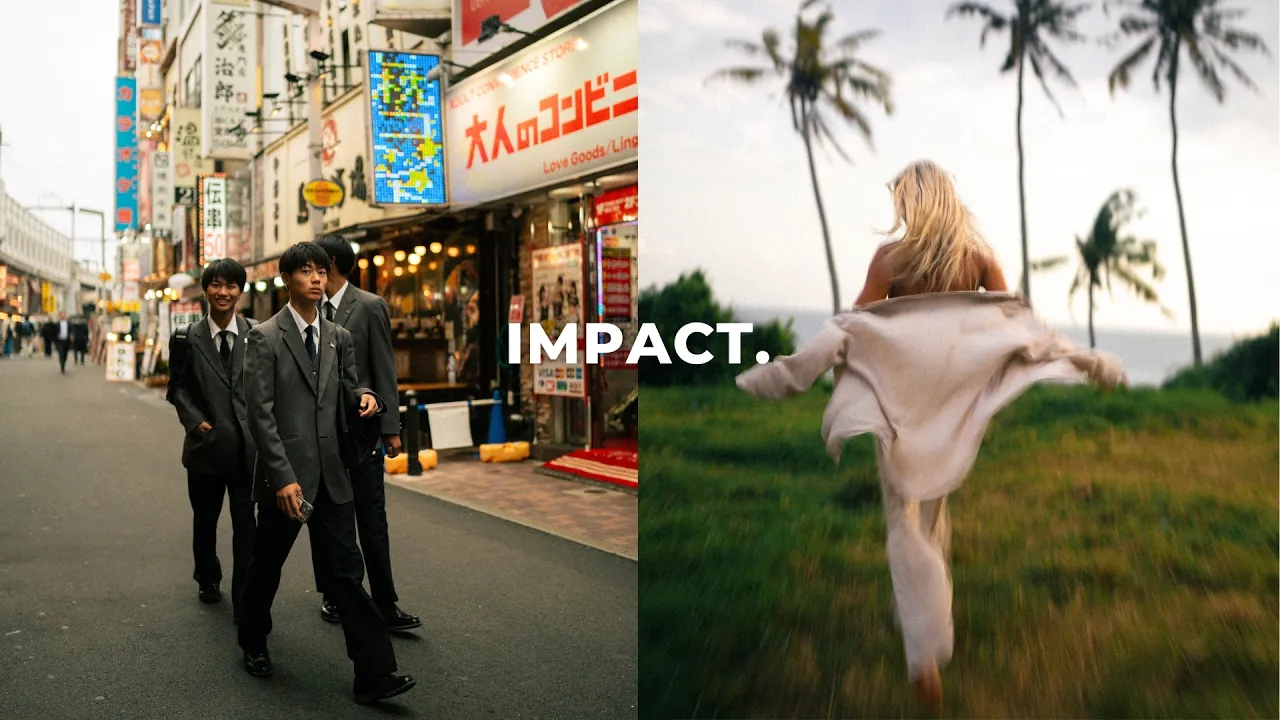
How to Take Photos That Make You Feel Something
Photography Basics
Six principles that have a massive impact on the emotion and feeling of your photos, and how to use them intentionally.
·
10 min read

Why do you think some photos speak to you and others don't? We see hundreds, if not thousands, of photos every day, and most of them we don't pay any attention to. But every once in a while you see a photo that makes you stop and go, "Wow, that's beautiful," or "that's interesting," or "that's powerful."
Most of the time we look at that image for a few seconds and then move on. But have you ever stopped to think about why those photos make you feel the way they do? That's what emotional photography is all about. I think a lot of different factors contribute to the emotional impact a photo can have, but there are a few that matter much more than others.
So in this post, I'm sharing the principles I think have the biggest impact on the emotion and feeling of your photos, how to use them intentionally in your own work, and a few things I personally look for when I'm out shooting and trying to create images that actually mean something. Let's go!
READ OR WATCH: This blog post is also available in video form! If you'd rather watch me explain this content, simply watch the video below. Otherwise you can find the text guide below. Just keep scrolling!
In How to Take Photos That Make You Feel Something, I walk around Lisbon and show you each of these principles with my own photos.
1. Embrace imperfection
One of the traps we fall into when we start out with photography is chasing technical perfection in every single photo. Every image has to be super sharp and in focus, with the perfect amount of contrast, and everything just looks really nice and pleasing.
But technical perfection has nothing to do with the emotional impact of your photo. In fact, photos that feel too perfect or too polished can end up feeling less emotional, with less of a story, because when you overpolish a photo, you remove the thing that actually made it feel real.
I think embracing imperfection is one of the best things you can do to add more emotion to your photos, and it's something I've been doing a lot over the last few years. I used to be obsessed with removing any trace of grain from my images, and everything had to be super sharp. Now I'm experimenting a lot more with out of focus images, slower shutter speeds to capture motion blur and movement, and adding grain in the edit to give a photo some texture and a more raw, emotional feeling.

A few other ways to embrace imperfection:
Tilt your camera. A crooked composition can show a little chaos or movement in a scene.
Include sun flare. Flare can give your photo a lot more atmosphere.
Crush the blacks or the whites. Throwing away the detail in the darkest or brightest parts of your image can make a photo feel really bold and intense.
Slightly miss focus. A subject that isn't perfectly sharp can make a photo feel more dreamlike.

None of this is something you'd learn in a photography textbook. In fact, it's the complete opposite, because none of it is technically perfect or technically correct. But there's no right or wrong in photography, and the faster you can embrace imperfection in your work, the faster you'll capture photos that actually mean something.
Imperfection alone won't give your photos more emotional impact, though. You need to pay attention to the other principles too.
2. Include a human element
Having a human element in your photo is one of the easiest ways to capture more emotion, and the reason is simple. As human beings, we relate to photos of other human beings. When you include a human element, it makes people imagine what it would be like to be standing in that photo, experiencing what's actually happening in it.
This shows up in a few different ways. If you're shooting a portrait, it's really easy for your viewer to read the emotion on your model's face. But it can be much simpler than that. Something as small as a hand in your photo, or a sign that a person was just there, can make an image a lot more relatable and a lot more emotional.
That's one of the reasons almost every single image in my portfolio has a human element in one way or another. Even with big, grand landscapes, I like to add a person, because it gives the image scale, and it makes the photo a lot more relatable than a landscape with no human element at all.

The opposite is true as well. Purposefully removing people from your image can give you a photo that feels a lot more lonely, isolated or empty. But this has to be done deliberately, rather than just photographing a place that happens to have no people in it.
For example, there's a style called liminal photography that's really popular in the film photography community. It involves going to older, often abandoned places and photographing them without any people. These photos don't have a direct human element, but they do in the sense that these places were once full of people. With nobody in the frame, that lonely, isolated vibe really hits home.

Photo by Sam Operchuck on Unsplash.
So generally speaking, a human element is one of the easiest ways to capture a photo with more emotion. But if you do it right, purposefully leaving that human element out can have just as much impact.
3. Use color to enhance the emotion
They say Lisbon is one of the most colorful cities in the world, which made it the perfect place to talk about this one. I've already gone super deep on color in my video on color theory, but in short, color plays a massive role in the emotion and feeling of your photos. Warmer colors like orange and yellow can feel cozy, energetic, epic or nostalgic. Cooler colors like blue and cyan can feel calm, distant, quiet, lonely or subdued.

I think a lot of us approach color mainly from an aesthetic perspective, not an emotional one. We stumble across some beautiful colors while we're out shooting and take a picture of them, which is great. But rarely do we actually think about how those colors affect the mood and emotion of the photo. If you can start thinking about color this way and being intentional with it, you open the door to capturing a ton more emotion in your images.

A lot of this happens while you're out shooting, but the editing phase is perhaps even more important, because that's where you can really shape the color in your images to target a very specific emotion. On one photo I shot here in Lisbon, I wanted to add some warmth. Instead of warming up the entire image, I added warmth into just the highlights and pulled out a little more blue in the sky, and with just those few adjustments the image felt so much more powerful, rich, warm and epic.
Color is also heavily affected by contrast. Adding midtone contrast enhances saturation as well, so it can bring out a lot more color without touching a single color slider. I do this with every single one of my images, and I think making those final contrast adjustments just before you post is a really good habit to have. (For more on this, here's the trick to perfect color grades in Lightroom.)
4. Shape the mood with light
It's impossible to talk about emotion without talking about light. But just like color, when we discuss light in photography, it's usually about how the light looks, not the emotion and feeling it gives your image. And it goes without saying that light has a massive impact on that feeling, both the light you're shooting in and the overall exposure of your photo.
Shooting at sunrise and sunset can add really dramatic, directional light that leaves some parts of your image dark and others nicely exposed, and that adds a ton of drama. That's one of the reasons so many people recommend shooting at golden hour: the emotion is kind of baked into those shots to begin with. But golden hour isn't necessarily the best light for every emotion. It all comes down to what you want your photo to feel like, and there's no such thing as bad light. Different light just has different effects on your images.
Blue hour. Just before sunrise or just after sunset, you get really beautiful, soft, blue light. It's amazing for capturing a moody, isolated or solemn vibe, and it's one of the reasons I love shooting at blue hour so much.

Hard midday light. Harsher light has its place too. It often gives you a higher contrast image that looks a little more bold, intense or serious, and I personally love the look and feeling it brings to my images. I go much deeper on this in how to shoot in harsh midday light.

Exposure. It isn't just the light you shoot in, it's also the overall exposure of your photo. If you look at my portfolio, you'll see a lot of my images are quite dark and moody. I like that aesthetically, but also emotionally: it makes my images feel a little more serious, dramatic, bold, maybe mysterious. Brighter exposures can do the opposite and feel dreamy, airy, open and happy, and that style looks really good too. While I do prefer a darker exposure and more dramatic light, there are absolutely situations where I prefer a brighter scene, because it better suits the story I want to tell.
5. Pay attention to distance and spacing
The distance and spacing in your image can have a massive impact on the overall feeling of your photo.
Distance is simple: it's how close you are to your subject. That's your physical distance, but also your lens, because a longer focal length pulls you closer. Generally speaking, the closer you are to your subject, the more emotional or intimate the photo can feel. The opposite is true too. If your subject is a tiny speck in the distance and you're showing a lot of the scene around them, the photo can feel a lot more epic or dramatic, or a lot more lonely, isolated or empty, depending on how you use negative space.

Spacing is where negative space comes in. Using negative space doesn't just simplify a scene, it lets you really hammer in feelings of isolation, loneliness or emptiness. You'll find this across a lot of my portfolio: I like to have a small subject way off in the background to give the photo a sense of scale, with a lot of negative space around them to let that subject breathe and really hammer in the idea that the person is alone in the middle of nowhere.
If you don't want your photos to feel moody or empty, do the opposite and fill your frame with subject matter. That can make a photo feel a little more busy, chaotic or messy, but if that's the feeling you're going for, there's absolutely nothing wrong with that.

This one is definitely related to composition (I go deeper in how to improve your composition), but compositionally speaking, I think the distance to your subject and the space around it have the biggest impact on the feeling of your photo.
6. Shoot the simple things
A lot of the photos I've shown you in this post are quite epic and grand, of really beautiful places I've traveled to. But if you asked me which photos mean the most to me, I'd probably tell you it's the photos of my everyday life. The simple, mundane things we often forget about, even though we see them every day. Some of my favorite images are ones I've shot at home, of my friends and their families, or of the places I've lived.

You don't need a super grand, beautiful subject to capture a photo with emotion. Sometimes the simplest scenes can bring out just as much emotion as the grand landscapes you shoot in far away countries. The trick to photographing simple subjects is to use everything we've talked about in this post. Pay attention to the color and the light in the scene. Give the image some imperfection, maybe a little grain to give it a more nostalgic feel. It's amazing how much emotion you can convey, no matter how simple or mundane the subject actually is.
So, how do you take photos that make people feel something?
It all comes down to being intentional. Intention goes a really long way in photography. Embrace imperfection, include (or deliberately leave out) a human element, use color and light to shape the mood, think about distance and spacing, and don't overlook the simple things. When you think about all of these ingredients and use them together in your own combinations, you can capture so much more emotion and feeling in your photos.
I've no doubt missed some of the things that contribute to emotional photography. If you think I missed anything important, let me know in the comments on the video. I'd love to check them out! And if you want to keep learning, check out my post on how to find your photography style.
Best of luck and happy shooting!
Do you vibe with my style? Most of the photos in this post were edited with my Film Vibes Preset Pack, the same presets I use to edit pretty much all of my images. Check out the Film Vibes Preset Pack

Get the look in one click
Film Vibes Preset Pack
30 film-style presets that give your photos a timeless touch, inspired by famous film stocks.
$34
30 presets · For Lightroom
Sean Dalton
Made with ☕ and a camera.