The 4 Stages of Photography (and How to Get Better at Each One)
Photography Basics
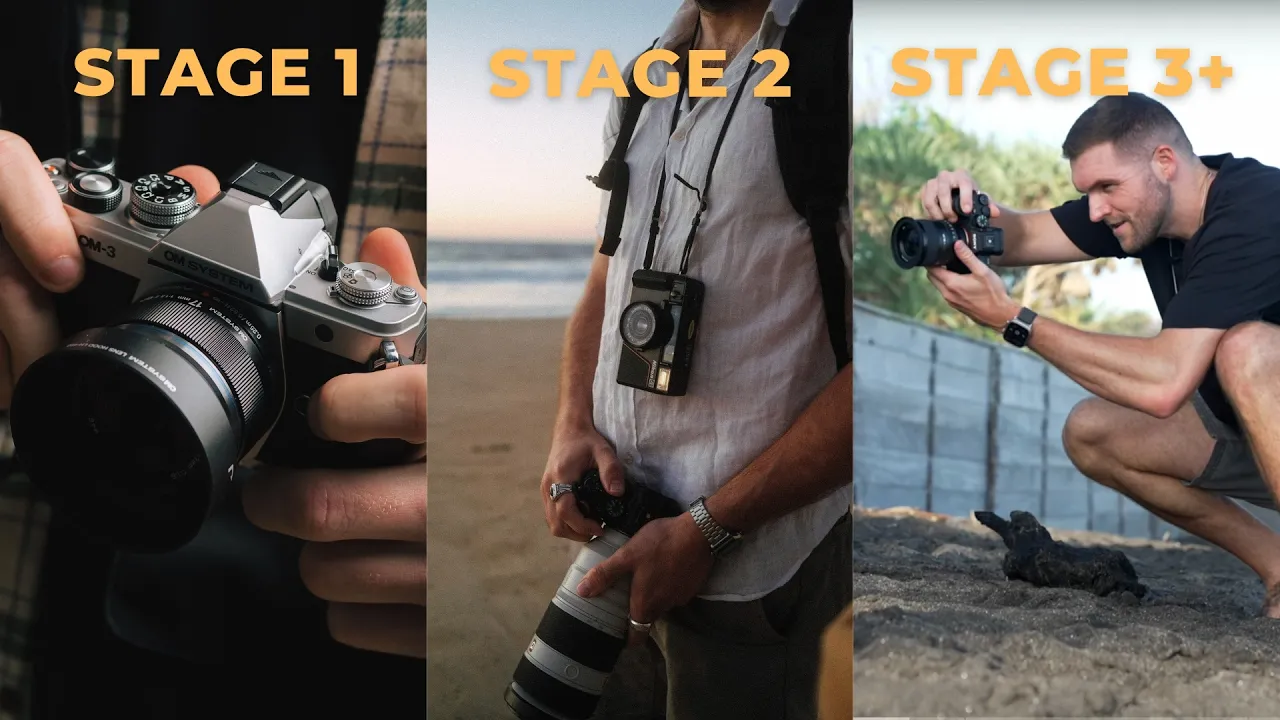
From the fresh noob to the master, these are the four stages of photography I think we all go through, and how to get better at each one.
·
12 min read

Photography is one of those art forms that never really ends. The more you get into it and the more you learn about it, the more you realize how much you don't know, and how much more there is to learn.
I think there are four main stages of photography we go through as photographers. It starts at the very beginning, when we're complete noobs who just picked up our first camera and are stoked to shoot everything, and goes all the way to being an established photographer who's getting recognition and is actually proud of their work. In this post, I'm breaking down those four stages, so you can figure out which one you're in, plus tips for getting better at that specific stage. Let's go!
READ OR WATCH: This blog post is also available in video form! If you'd rather watch me explain this content, simply watch the video below. Otherwise you can find the text guide below. Just keep scrolling!
In The 4 Stages of Photography, I talk through each stage and what helped me move through it.
Stage 1: The fresh noob
This is the photographer who just started. You're a complete beginner, fully stoked on taking photos, but you don't really know what you're doing yet.
Maybe you don't even have a camera yet, and you're shooting on an iPhone or an Android phone. Or maybe you have an older or beginner DSLR with just a kit lens. None of that really matters to you. You just want to shoot super sick photos, and you're going out and shooting all the time: close-ups of flowers, portraits of your friends, whatever. You're engaging with the photography process and absolutely loving it.
You still have a lot to learn, but you're pretty proud of your images. This is a good time to bring up the Dunning-Kruger effect: when we don't know much about something, we tend to think we're better at it than we are, and the better we get, the more we see how much we're missing. In the beginning, we think our work is pretty sick. Especially once we get that first prime lens, the 50mm f/1.8, and start shooting everything at f/1.8. It looks really cool, and we probably think our photos are a lot sicker than they actually are.
But we all start here. And the better you get, the more you'll start to criticize your work, which can be both a good and a bad thing (more on that later).
Honestly, this stage is probably the most fun one. There's so much to learn, it's a completely new art form, it's exciting, and you're obsessed with it. I have very fond memories of going out and photographing super random stuff, just because I wanted to capture cool images. I didn't care what I was shooting. I just wanted to create something beautiful. That feeling is super addicting, and you should definitely take advantage of it.

How to get better at stage one. The best thing you can do is just keep shooting. Expose yourself to photography as much as you possibly can, and shoot absolutely everything: portraits, landscapes, street photography, still life. This is where you build a really solid foundation, train your vision and learn how to use your camera. The more you engage with photography, consume good work and create as much work as you can, the better you'll get. (Here's why you should photograph everything.)
You should also focus on the foundations of photography here and become technically fluent with your camera. Once you can do that, your camera stops being a barrier between you and your creative vision, and instead becomes a tool you can use to capture it.

Stage 2: The passionate hobbyist
That first stage doesn't actually last very long, and you'll quickly find yourself in stage two: the passionate hobbyist.
You're still obsessed with photography, and that obsession is still fueling you to go out and shoot. You've got a pretty decent kit by now, a nice camera body and maybe a few lenses. You've invested a bit of money into this hobby, and you're getting more serious about it.
You're also becoming much more technically fluent with your camera. You kind of know how manual mode works, or maybe you're even fluent in it. People are starting to recognize your work. You're getting nice comments from family and friends, or positive feedback on the photos you post online.
You're getting better at editing too. You've taken some time to learn how Lightroom works, but you're still not super happy with your edits, because you can't quite get the right colors or things just don't look how you want them to. One thing I see with a lot of photographers at this stage is that they're over-editing a little. They're going for a stylized look that's a bit too stylized and too far removed from reality. I think that happens to most of us: we want to create this super cool look in Lightroom, but we take it a little too far.
You're also getting a clearer idea of what you want to shoot. Maybe you're fully obsessed with street photography, or really into landscapes or portraits. This is where you start to hone in your style a little. (If you're working on that, here's how to find your photography style.) You might even have been paid for a few shoots, like some graduation photos or portraits for a friend. At this point, you're probably good enough to get paid for your work.
This is a really fun and crucial stage, but it's also where imposter syndrome starts to creep in. As you get better, you start reflecting more negatively on your work. You compare yourself with all these other photographers and realize your work isn't as good as you thought it was. That's totally normal, and so many of us deal with it as we grow as artists. If you do start reflecting negatively on your work, approach it with a constructive lens instead of a negative one: there's still so much for me to learn, and my photos aren't the best yet because I haven't gotten to where I know I'll be in the future.
How to get better at stage two. One of the best things you can do is start collaborating and shooting with other photographers. It gives you insight into someone else's creative process, and there's so much to learn there, especially from a photographer who's a bit more skilled than you and shoots the same kind of work you want to shoot. If you're into street photography, go out and shoot the street with another street photographer. Ask them questions, watch how they shoot, and take some insight from that.
So much of what I've personally learned came from going out and shooting with other photographers, especially ones who inspired me at some point in my career. It's also a lot more fun to create something with other people. (It's one of the bad photography habits I'm still working on myself.)

Stage 3: The cook
Stage three is the cook, because by this point, you're absolutely cooking.
You've been shooting for a few years. You might even be a full-time pro, or you might not, because you don't need to be a pro to be an epic photographer. But at this stage, you're definitely good enough to get paid for your work. And your work is sick, and it's getting the recognition it deserves. Maybe you've been published in a magazine or featured on a website somewhere.
You also have all the gear you need to capture your creative vision, and it might not even be that much gear. As you grow, you realize you don't need all these different lenses to capture something sick. You've identified the focal lengths you vibe with most, and you keep your kit small because you know what you need.
You're fully technically fluent with your camera. You don't even need to think about your settings, because your camera is an extension of your body. You instantly know what's going to work. And you're not too fussed about it, because you've realized that perfect camera settings aren't the most important thing in an image. You're more focused on the intricacies of the scene in front of you.
You're probably a good editor too, and you've started to gravitate back toward a more natural color palette. The beginner and the passionate hobbyist might be playing with colors and trying to be super creative, but you've realized that natural colors look good, and you can still have a super stylized, creative image while keeping them natural.
You probably have your own unique photography style by now, or you're getting pretty close. You have a very good idea of the direction you want to go, and you're just working out a few more kinks.
But this is also the stage where you get really hard on yourself. Imposter syndrome really takes hold in stage three, and you start reflecting very negatively on your work. You don't get the benefit of the early Dunning-Kruger effect anymore, where you think your work is really good because you don't know what's ahead of you. Now you're an advanced photographer, you've been exposed to all this really epic work, and you realize there's still so much more to learn. So you look at your work and think, "What am I doing? This isn't good."
Imposter syndrome is brutal, and it will take hold of you no matter who you are. So it's really important to stay aware of it at this stage, and to surround yourself with other photographers who'll tell you your work is good and you shouldn't stop creating. If you feel like you're in a creative lull, that's completely normal. Remember that your work is probably better than it's ever been, and you're only going to get better from here. (I wrote a whole post on getting through this: the boring middle of photography.)
How to get better at stage three. Stop chasing perfection and chase purpose instead. Go out and try to tell meaningful stories with your work. Work on passion projects. Do something you're actually interested in, not because you feel like you have to.
The better you get at photography, or any skill for that matter, the more likely there'll come a point where you start to question why you're doing it. That's when you need to fall back on the creative projects that drew you to photography in the first place, and go chase those things.

Stage 4: The master
Last but certainly not least is stage four: the master. (Honestly, I think we can come up with a better name than "the master," so let me know if you have one.)
By this point, you've mastered your craft. Not just technically, but more importantly, creatively. You realize that the most important thing in a photograph isn't your camera settings. It's the creative side of photography: the light, the color, the composition, the texture, and how all of those come together to create a powerful image.
You have a super detailed understanding of all of those creative elements. You have a really deep understanding of light, a solid grasp of color and the color palette you like to use, and you've identified the compositions you like to shoot most. And because you understand the creative side so deeply, you're insanely dynamic and versatile. You can step into any scene and create something beautiful, even if the lighting is terrible or it seems like there's no interesting subject matter.
You also recognize that imposter syndrome is just part of the game, and you've learned how to overcome it. You recognize those thoughts, you know they're nonsense, and you don't let them hold you back. You're confident, but you're humble, and you know you don't know it all, because you can't know it all. You can't reach this stage if you think you know it all, because there's always something more to learn.
A photographer at this stage is still experimenting, still learning, still trying new things and trying to break new ground creatively. They understand that mastery isn't a finish line. It's a cycle, a never-ending process, and there's always something new to discover. You can only really make it to this stage if you recognize and embody that.
How to get better at stage four. One of the best things you can do is mentor a beginner. Working with someone who sees the world with fresh eyes, without all the biases you've built into your vision over the years, is a really interesting way to see the world differently. It almost puts you back in that first stage, where you're super excited about creating again. If you can reignite that stage one energy and pair it with all the skills you've built over the years, that's a deadly combo, and you're destined to create something super sick.

So, which stage of photography are you in?
That's my take on the four stages of photography: the fresh noob, the passionate hobbyist, the cook and the master. I'm sure there are a million other ways to look at it. Maybe you think there are five stages, or ten. This is just how I understand it.
So what stage are you in? Are you a fresh noob just starting out, a passionate hobbyist who's been shooting for a little while, or are you at stage three or four? Let me know in the comments on the video, because I think it's a super interesting exercise. And if you're looking for practical ways to move to the next stage, check out the six tips that made my photos better.
Happy shooting!
Building your foundation? My Photography Essentials course gives you a super solid foundation on the basics of photography, so you can go out, shoot and create better photos, and move through these stages faster.


Sean Dalton
Made with ☕ and a camera.