Why You Should Photograph Everything (How to Become a Versatile Photographer)
Photography Basics
Versatility is the one skill every great photographer shares. Here are five ways to become a more multifaceted photographer, shot on the streets of Hong Kong.
·
9 min read

If I asked you what the most important skill a photographer can have is, what would you say? Maybe a deep understanding of light, or a really strong eye for composition. And you'd be right. Those are incredibly important skills.
But there's one skill I think every great photographer possesses, and that's versatility. Another way I like to put it is being multifaceted. So I went to the epic (albeit a little rainy) city of Hong Kong to shoot, and to break down how you can become a more versatile photographer too. Let's go!
READ OR WATCH: This blog post is also available in video form! If you'd rather watch me explain this content, simply watch the video below. Otherwise you can find the text guide below. Just keep scrolling!
In Why You Should Photograph Everything, I walk through each of these tips while shooting around Hong Kong.
What is a multifaceted photographer?
A multifaceted photographer is someone who can shoot well across a wide range of photography styles, environments and situations. They know how to work with all different types of light, they recognize patterns in compositions that a lot of other people miss, and they can shoot great photos almost anywhere, regardless of the conditions.
Because of this, multifaceted photographers often have a portfolio that spans a wide range of subject matter. You'll see portraits, landscapes, street photography and still life, but all of those images still fit into one cohesive photography style (if you're still working on yours, here's how to find your photography style).
This definitely isn't easy to achieve. But becoming a multifaceted photographer can really take your work to the next level and set you free creatively.

1. Shoot a little bit of everything
I filmed this part at Choi Hung Estate, one of the most iconic locations in Hong Kong. It's iconic for a reason. The colors, with the buildings in the background, are just so Hong Kong. And it's a good place to talk about the first tip, which is honestly probably the most important one: shoot a little bit of everything.
I'm not saying you need to go out and shoot a bunch of random stuff you're not interested in. For most of us, this actually happens pretty naturally throughout our photography careers.
When I first started out, I was absolutely obsessed with still life photography. I was shooting photos of coffee and interiors, really trying to capture that moody coffee shop vibe. That was my style early on because that's what I wanted to shoot. Then it transitioned over to travel photography, then I got really focused on landscapes, and I had a stint where I was really obsessed with portraits.
During each of these micro obsessions, I got really good at that one specific style of photography. So when I moved on to the next one, I could transfer those skills over, and that helped me become a multifaceted photographer more than anything else.

So if you want to shoot portraits, go out and shoot portraits. If you want to shoot landscapes, shoot landscapes. You don't need to pigeonhole yourself into one specific thing, especially early on in your photography career.
If you want to pivot and shoot something outside your expertise, I think that's actually one of the best things you can do to become a more skilled photographer. It restarts you from the ground up, so you have to learn everything all over again, but you still have your skills carrying over.
2. Shoot in all different types of light
Speaking of the lack of sun in Hong Kong, the second tip is to shoot in all different types of light. When we first start out, we learn that the best time to shoot is at sunrise and sunset. And yep, those are absolutely amazing times to take photos.
But one thing you'll notice about every multifaceted photographer is that they can walk into any lighting scenario and capture something great. So shoot at sunrise and sunset, but also learn how to shoot in harsh midday light and deal with the hard shadows cutting through your composition (here's how to shoot in harsh midday light). Learn how to shoot in overcast weather, and how to work with color in those conditions so your photos still pop.

Even shooting at night can teach us so much about light, and about how light interacts with the environment and reflections. That's a really important skill set for us to build as photographers.
I shot a lot at night in Hong Kong because I think the city really comes alive after dark. It was also a great way to escape the overcast days. You can still find really good conditions while shooting at night.

3. Stop relying on your photography crutches
A photography crutch is a habit we develop in our shooting that we rely on and always fall back on when we're not sure what to do next. This isn't always a bad thing. Sometimes you do need to lean on those crutches to capture something cool in a given scenario. But when you're relying on them all the time, all of your work starts to look the same.
A good example, and I see so many beginner photographers do this (I did it myself for years, so I'm not excusing myself here), is shooting everything with a very shallow depth of field. Most often this happens because we pick up our very first 50mm f/1.8 and all we want to do is go outside and capture photos with a ton of bokeh. But when you do it every single time, it becomes a crutch, and it stops you from thinking outside the box and trying something different.

A shallow depth of field isn't the only photography crutch you can have. Maybe it's symmetry in every one of your shots. Maybe it's shooting every single photo at eye level, or only shooting in really dramatic light at sunset. It could be a million different things. (I cover a few more of these in why most photos are forgettable.)
The moment you start relying a little too much on your crutches is the moment you start leaving creativity on the table. I think it's really important to force ourselves to be creative and think outside the box, and one of the ways I like to do that is the next tip.
4. Shoot in sets
Shooting in sets means that every time you approach a scene, you go in looking to shoot at least four photos:
A wide shot that shows the scene and establishes the setting.
A midground shot where you get a little closer and focus on one specific element from that larger scene.
A tight shot where you really start to focus in on the details of that scene.
An abstract or texture shot.
When we shoot in sets like this, we can almost guarantee we'll walk away from a scene with a diverse set of images.
A good example is a little scene I stumbled across while shooting at night in Hong Kong. I shot my first photo, a wide one, and I like it. It sets the scene.

Then I moved a little closer and shot a mid-range photo of the same man. I really liked how this one came out.

For the detail shot, I turned around and there was a taxi parked right in front of me, so I shot a close-up of the little taxi light on its roof.

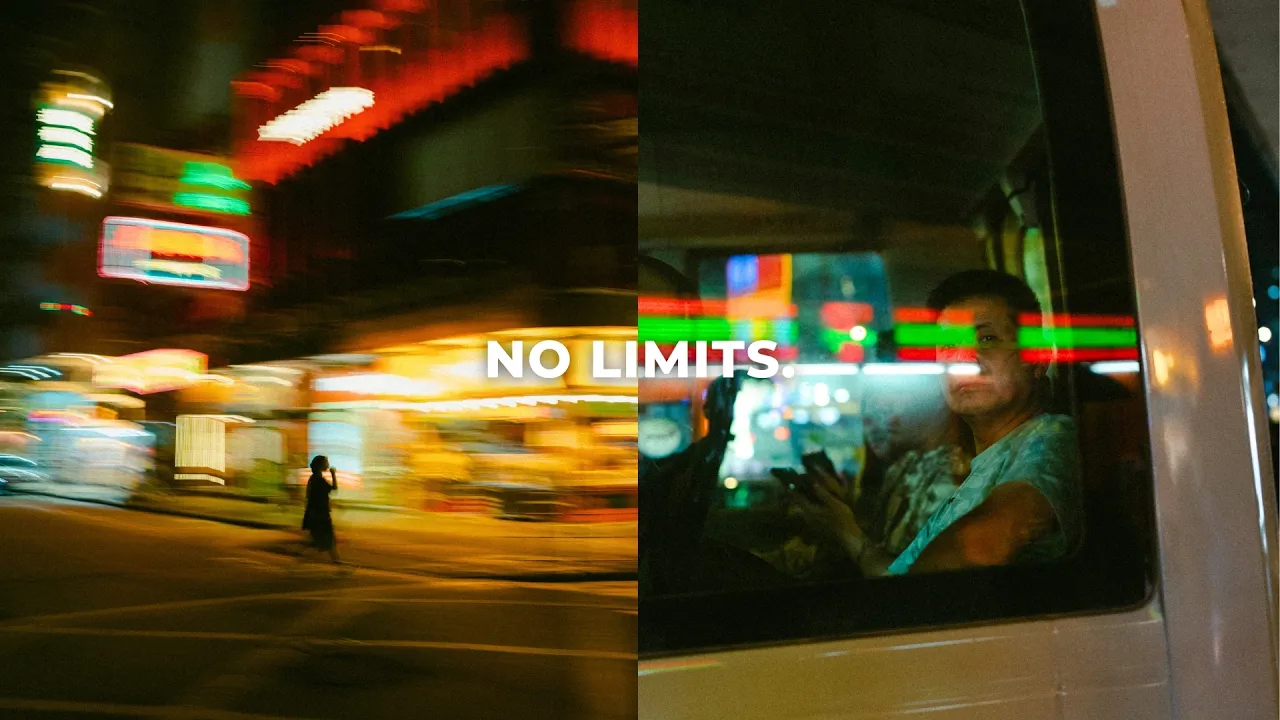
At one point there was also a bus driving by, and I shot a super cool portrait of a guy on the bus, with a reflection of the lights behind me hitting the glass. This is probably one of my favorite photos from the trip.

And for the abstract shot, there were all these crazy lights going on across the street. So I experimented with a slow shutter speed while tracking at the same time. I used a shutter speed of half a second, which is really slow for a handheld photo, and tracked a man walking across the street. In the final image he's a little bit in focus (not really, but a little bit), and the rest of the scene is nice, blurry and abstract.

I think having a super creative photo like this can add so much to a collection of images. It ultimately tells a much deeper and more interesting story about the thing you're photographing.
This is just one example. I'm almost always thinking this way when I go out and shoot, even with something like landscapes. And it doesn't have to be just four photos. You can add more categories, like a photo that really focuses on capturing the light of the scene, or one you plan to edit in black and white later. It could be anything. So next time you find yourself doing the exact same things you're always doing, think outside the box a little and capture a diverse set of photos from that scene.
5. Stay curious and never stop experimenting
Last but certainly not least, be curious and never stop experimenting with different styles and techniques. One character trait I notice in pretty much every photographer I'd consider multifaceted is curiosity. They're constantly curious about how photography works. Even though they know so much, they're still out there experimenting with new techniques, trying new things, and approaching photography like they did when they first started out.
I think it's really important to never let go of the growth mindset you had when you first got into photography. Every time you try something new, you learn something and expand your skill set as a photographer, and that's ultimately what leads you to becoming multifaceted over time.

I know this last one might sound simple. But the more we grow as photographers, the more we start to get set in our ways, and the less likely we are to try new things. The truth is, trying new things is the best way to keep growing and getting better.
This is something I've been trying to embody a lot more recently, specifically with slower shutter speeds. In a lot of the images I shot in Hong Kong, I was trying out new techniques for the first time, and I'm really happy with how some of them came out. Now when I go on my next trip, I know I have that skill set in my toolkit to pull from.
So, why should you photograph everything?
Those are the main tips I think you can follow to become a more versatile photographer over time. I really do think being a multifaceted photographer is the ultimate flex. Being able to go out and shoot anywhere, capture something cool, and still have it fit into the cohesive portfolio you've put together is a spot so many photographers want to reach. And if you follow these tips, you'll make it there eventually.

I'm sure I missed something, so if you think I left out anything crucial, let me know in the comments on the video.
Happy shooting!
Do you vibe with my style? Most of the photos in this post were edited with my Film Vibes Preset Pack, the same presets I use to edit pretty much all of my images. Check out the Film Vibes Preset Pack

Get the look in one click
Film Vibes Preset Pack
30 film-style presets that give your photos a timeless touch, inspired by famous film stocks.
$34
30 presets · For Lightroom
Sean Dalton
Made with ☕ and a camera.