Why I Hate Shooting With a 24mm Lens (and What It Taught Me)
Gear
I'm a 35mm shooter through and through, so I challenged myself to shoot a busy Bali market with only a 24mm lens. Here's why it was so hard, and what it taught me about wide angle photography.
·
10 min read

If you've been following my work for a while, you know I love shooting 35mm. That lens basically never leaves my camera. It shows so much of the scene, but it also lets me leave certain things out of the frame, and in my opinion it's just the best focal length. (You can fight me on that.)
But recently I realized I'd been getting pretty comfortable with it. That's not really a bad thing. Getting really comfortable with one focal length is one of the beauties of shooting with prime lenses. But I'd gotten a little too comfortable, in the sense that I didn't really branch out anymore. I pretty much only shot 35mm and above.
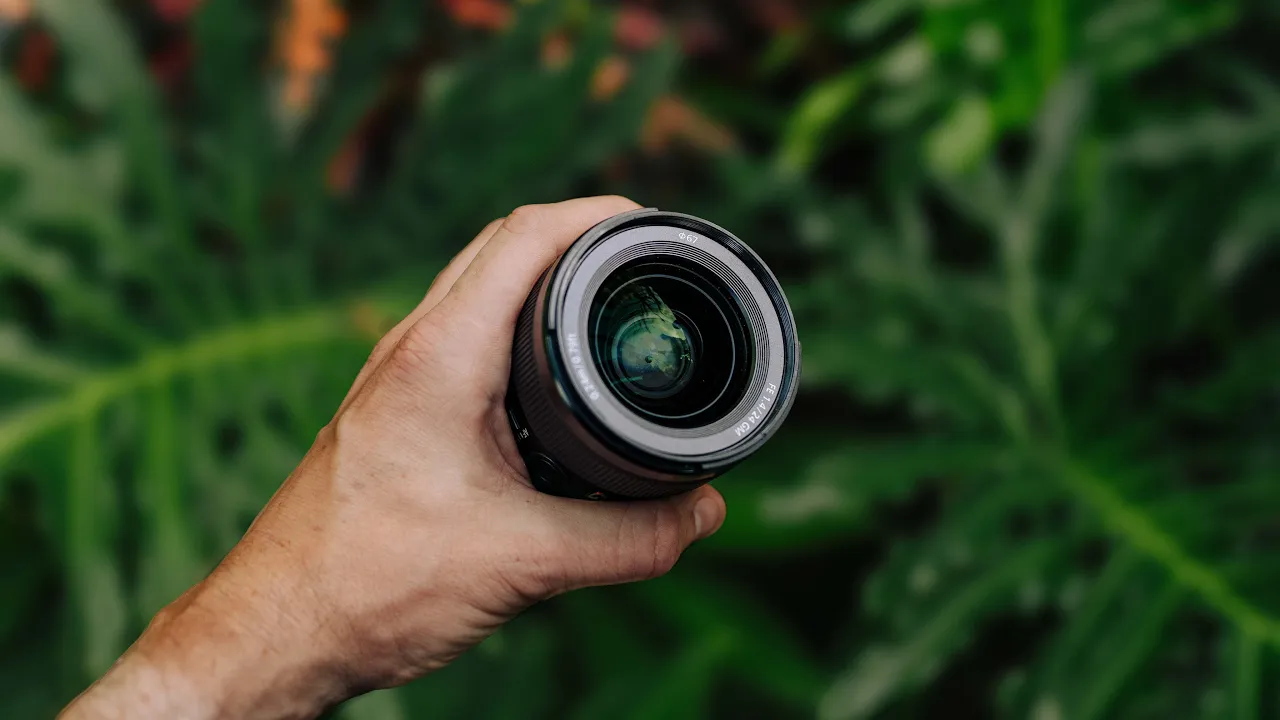
So to challenge myself, my friend Jord and I went out to Badung Market in the heart of Denpasar, Bali, and I brought only one lens: a 24mm f/1.4. The specific lens doesn't matter here. I'm talking about the 24mm focal length. In this post, I want to talk about why I found a 24mm lens so incredibly difficult to shoot with, plus the strengths and weaknesses of shooting wide, whether that's 24mm, 16mm or even 28mm.
READ OR WATCH: This blog post is also available in video form! If you'd rather watch me explain this content, simply watch the video below. Otherwise you can find the text guide below. Just keep scrolling!
In Why I hate shooting with this lens, I walk through every photo I shot at the market.
Why a 24mm lens is so hard to shoot with
Like I said, I think 35mm is a really balanced focal length. I can fit so much into the frame, but it's not so wide that I have to fit everything into the frame. With a 24mm lens, you no longer have the luxury of leaving things out the way you can with a 35mm or a 50mm. 24mm is pretty damn wide.
One thing I noticed while shooting that week is that I really gravitate toward pretty pictures. What I mean by that is I like to leave certain things out of my compositions to keep them clean, organized and balanced, and 35mm really lets me do that. Once you go wider, it becomes very difficult to hide things from your frame.
I noticed this most at the market, because there's just so much going on there. (If you come to Bali, I highly recommend it. The people are incredibly kind, and they're so stoked to get their picture taken. I don't think I've been anywhere else in the world where locals are this happy to see you out shooting.) Everywhere I turned, unless I was super close to my subject, there was so much going on in the scene that I couldn't simplify my compositions the way I wanted to. I like having a very clear subject, with the rest of the frame telling that subject's story, and I found that really hard to do there.

Where a wide angle lens really shines
That's also exactly why a 24mm lens is so powerful: you can show so much of the scene and give your subject so much context. I realized that very quickly. With such a wide field of view, I could tell a much more compelling and interesting story about the person or thing I was photographing.

If you look at some of the most famous street and documentary photographers, a lot of them shoot quite wide for exactly this reason. You can also create really advanced, dynamic compositions that are much harder to pull off with a 50mm or 85mm.
Layers. This is where 24mm really shines. You can capture multiple layers in your scene, with several subjects all doing their own thing, all in the frame, all helping to tell one cohesive story.

The problem is that it's incredibly difficult to get right. You have to be super patient. I realized how lazy I'd gotten with a 35mm lens: when I don't like something, I just leave it out of the frame. With a wide angle lens, you can't escape it. You either have to figure out how to incorporate it into your composition, or force yourself to find a perspective where you can leave it out, and that's much harder.
Breaking down my 24mm photos from the market
Here's a closer look at some of the photos I shot at the market, and my thoughts on why some of the compositions work and why some fall a little short.
Three men, three layers. I absolutely love this photo, and it's a prime example of capturing layers. There's so much going on throughout the frame, and your eye moves from the old man in the front all the way back to the guy lying down at the back. These guys were absolute legends. They just wanted to get their picture taken, and the guy lying down couldn't have cared less. He was posing, just vibing. The old man in the foreground looks off to the right of the frame, so stoic and interesting. Is it the most powerful composition in the world? No. But it's an interesting shot, and that's why I like it so much. (Fun fact: this was the market's toilet. These guys ran it as their business.)

A clear subject in a busy scene. The photos I took of a little boy at the market are some of my favorites of the day. He's very clearly the main subject, and I think I did a good job of making that clear: you can't see the eyes or faces of the other people in the frame, but he's right in the middle and easy to see. Because I was shooting at 24mm, you can see so much of the frame around him, which gives so much context about what he's doing, who he is, and what it's like to be at the market with his mom. He'd gotten a hat stuck on his hand and was throwing a little bit of a fit, so Jord went down and helped him out. My favorite of the set has him looking into the frame, so you can see his eyes, his hands and the hat.
There's another one from the same moment I really love, for the same reasons, though I wish I'd included his hand. It's killing me that I missed it. But I'd still say both of these are pretty busy, even though the subject is clear.
Using negative space to simplify. I did shoot some photos that are more in line with my style, where I leave things out so they're not distracting and use negative space to simplify the scene and strengthen the story. This is another little boy who was absolutely stoked to get his picture taken. His mom was telling him how to pose, and they were such a vibe. I love this one so much because the right side of the frame is basically empty, just a green tarp, so you focus right on him. He's making eye contact, you can see his hands, and because he's pulling that cover, it creates a nice diagonal line. You can also see back into the frame, so there's still a sense of depth, which is something I'm always looking for (more on that in why your photos are boring). It could have more layers. If I'd been more patient, I might have caught someone walking by in the background. But it shows you can simplify a wide scene if you put yourself in the right position.

Foreground elements that help (mostly). Here's another example where I tried to simplify the scene, and I think it did an okay job. It works because you can see his face and it's very clear he's the main subject, and the foreground elements keep the focus on him and add depth. But those foreground elements are a little distracting too, specifically the big basket on the left. It could still be a cleaner shot.

Creative compositions only a wide lens gives you. As I kept shooting, I started to embrace the chaos, jump into the mix and fit a bunch of different things into the frame. This is another photo I really love. The focus is on the hands on the wheel, but you can see the driver's face in the mirror. That's what shooting with a wide angle lens is all about: really creative, unique compositions like this. It would be even cooler with a more compelling subject in the back right of the frame, but it's still one of my favorites.

A 24mm lens pushed me toward people
This isn't the style of photography I usually shoot. I shoot a lot of street photography, but it's usually focused on scenes and aesthetics rather than people. I look for light, color, shapes and composition. If there's a person in it, great, but often there isn't.
Shooting with a 24mm lens, I quickly realized I was focusing on people a lot more, and using them to tell a more compelling story. We went into a little shop where a man had a bunch of limes in baskets spread all over the room. You can see so much of the scene: it's clear he's the main subject, but there's also a super cool retro TV, a quirky painting on the left with boxes below it, and all those baskets of limes, which add a lot of compositional interest.

I shot plenty of wide photos meant to show the scene as a whole. Some are fairly clean and some aren't. This one is much more my usual style: a vibey little scene with really nice light that emphasizes the colors, tones and mood.

Two more favorites. In this one, 24mm really shines because you see so much of the scene around him. It's a little too messy for my liking, but I love how the colors came out, and you can see what he's doing with his hands, which are so expressive.

And this is probably one of my favorite photos of the day. Two guys had just gotten a massive delivery of oranges, and they invited us inside to take some pictures. I didn't include their faces, just their legs and all those oranges, and it creates a really interesting composition. It just works.

Tips for shooting with a 24mm lens
Here's what that week taught me about shooting wide:
Get close to your subject. Unless you're right up close, everything else in the scene competes for attention.
Look for layers. Put subjects in the foreground, middle and background so the eye moves through the frame.
Use foreground elements and negative space to simplify a busy scene, but make sure they don't become distractions themselves.
Move your feet to find the perspective that leaves things out, since you can't zoom past them.
Be patient. Wait for the scene to come together instead of shooting and moving on.

So, should you shoot with a 24mm lens?
Shooting with this lens was definitely interesting. I found it incredibly difficult, and I think it takes a lot of skill to shoot wide and get photos you're really happy with. But I'm glad I branched out, because I came away with some really cool photos and a lot more appreciation for wide angle lenses.
I'll always love 35mm, because I love simple compositions, and I think 24mm is a little too wide for my liking. I'd love to try a 28mm, which feels like a good middle ground. If you want to see why I keep coming back to 35mm, here's why I love the 35mm focal length and how to shoot with a 35mm lens.
Which photo was your favorite, and what's your favorite focal length? Let me know in the comments on the video.
Happy shooting!
Want to get your composition dialed in? My Photography Essentials course covers composition, light and everything else you need to make every focal length work for you.a


Sean Dalton
Made with ☕ and a camera.