10 Photography Truths I Wish I Knew When I Started
Photography Basics
These are the photography truths I wish someone had told me when I started, learned from years of shooting and from photographers far more seasoned than me.
·
9 min read

Today I want to share some photography advice I really wish I'd had when I first started out. These are things I've learned over years of being a photographer, plus things I've picked up from photographers much more seasoned than me, and they've really stuck with me. I'm not going to sit here and blab. Let's go!
READ OR WATCH: This blog post is also available in video form! If you'd rather watch me explain this content, simply watch the video below. Otherwise you can find the text guide below. Just keep scrolling!
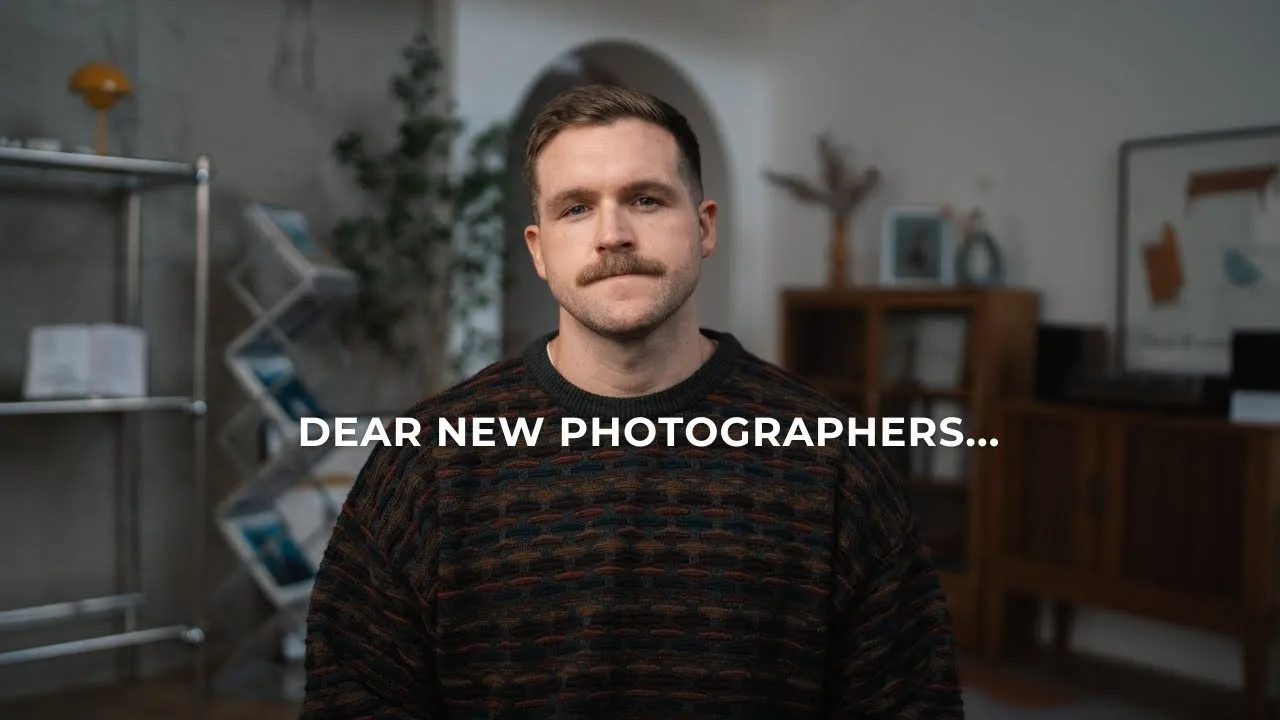
In Photography Truths You Need to Hear, I talk through all 10 of these.
10 photography truths every beginner should know
1. Your photos might suck (and that's okay)
Your photos might really suck when you're starting out with photography, and guess what? That's totally okay. All of our photos suck when we're just starting out.
I know whether a photo is "good" is 100% subjective. When I say your photos suck, I mean that most people just don't find them appealing yet. If you feel that way and you're early in your journey, that's totally normal. It's part of the process, and you will get better.
And if you're a more established photographer and you still feel like your photos suck (I certainly feel that way sometimes), that might be the Dunning-Kruger effect at work: the better we get at something, the worse we tend to think we are, because we start comparing our work to other photographers. So your photos might not actually suck. And if they do, that's okay, because you have something to work toward. Every great photographer started with a portfolio full of failures. Just keep shooting. (If you're in that frustrating middle stretch, here's the boring middle of photography.)

2. Learn to rely on your creativity and trust yourself
You'll find yourself in situations that absolutely suck for photography, and those are the situations that separate a great photographer from an average one, because a great photographer can make something out of nothing.
I learned this really early in my career. I was doing a portrait shoot for a client who really wanted to shoot at a specific cafe. We got there, the lighting was absolutely horrendous, and it was busy inside. I sat there thinking, "I'm screwed. There's nothing I can do." Then something clicked, and I told myself, "No, I have to figure this out. I need to rely on my creativity and trust that I can capture something compelling." So I went after it, experimented and tried different things, and we walked away with something cool.

Whether you're shooting landscapes, portraits or food, you'll end up in less-than-ideal situations. That's where great photographers shine, because they trust that if they experiment, they'll find something interesting.
3. Your vision is the key, not your camera
Your vision is the way you see and interpret the world around you. Good vision lets you recognize good light, good composition, interesting color or something beautiful in a scene that most people wouldn't even notice. That's exponentially more important than a super sharp photo with the least amount of noise. None of that matters. What really matters is capturing a story in your photo, and good vision helps you notice all the factors that come together to create a beautiful image with a compelling story.
You can train your vision by going out and shooting intentionally, being mindful of the photos you take, and noticing things while you're out and about, even without a camera. (Here's how to tell a story with your photos.)
This is also a good time to talk about gear. You don't need the latest and greatest camera to capture beautiful photos. You just need something good enough to capture your creative vision, and if your camera was made in the last several years, it's probably good enough. If you feel like you've genuinely outgrown your system and pushed it as far as you can, then it might be time to upgrade. That said, a few cheap accessories can be super useful, like an ND filter, a tripod or a reflector.

4. Shoot with other photographers
Everyone seems to think photography is a solo endeavor: you go out, capture photos on your own, then retreat to your editing cave. That couldn't be further from the truth. Photography benefits hugely from collaboration, like any art form.

Just going out with another photographer, seeing how they look at the world and capture it, and asking for feedback is an incredible way to improve your photography and capture more interesting images. But more importantly, it's a way to connect with someone who shares your love of photography and creating.
Some of my best friends came into my life through photography, and I know for a fact my work and career wouldn't be where they are today if I hadn't connected with them on Instagram, met up, shot together and eventually become friends. So go to meetups, DM people on Instagram, and try to connect with photographers in your local area.
5. Patience is key
I'm not talking about the patience it takes to get where you want to be as a photographer. I'm talking about patience at the micro level.
When you walk into a scene and nothing beautiful jumps out at you right away, don't rush through it to get to the next one. Slow down and look a little deeper. This goes back to training your vision: if you can be patient in a scene, you can almost always find something beautiful.
This is something I've been working on, because I'm really not good at it, especially when I'm shooting street photography in a bustling city. I get excited, I want to see what's around the next corner, and I move on too quickly, instead of sitting there for 5 to 10 minutes to see what happens. Whatever you shoot, the patience to sit with a scene and find something interesting in it is a really crucial skill.

6. Back up your photos
This is a quick one: please, please, please back up your photos. You won't realize how important it is until it's too late, and I'm speaking from experience.

Back in 2015, I hiked an abandoned section of the Great Wall of China. The conditions were beautiful and it was amazing. But I was such a noob that I put all my photos on my MacBook, and somehow, over the next few months, they disappeared.
So use an external hard drive, and back that drive up to the cloud or another external drive. If a drive corrupts, you lose your computer or something crazy happens, you'll still have your photos. Honestly, this might be the best advice in this whole post.
7. Study the classics
Timeless photography lasts forever. These days, most of us consume images through Instagram or YouTube, photos that were all shot recently. A really important question to ask yourself is: how will your photos look in 10, 20, 30 or 40 years? Do you want to look back and see something timeless, or think, "What was I doing? That was just a trend of the time"?
I'm not saying modern trends will die, or that the old way is the only correct way. I don't think that's true at all, and it's important to experiment with modern trends. But it's also important to look at the classics: how photographers used to shoot, how film stocks render images, and how the greats used composition, lighting, story and subject matter. We know that work holds up.
After consuming a lot of classic work, I've noticed my style shifting toward a more filmic look. My photos aren't one-to-one film recreations, but I'm gravitating back toward that natural, organic film look, and personally, I love how it looks.

8. Your camera settings don't have to be perfect
Good composition and a good story will trump camera settings 100% of the time. As long as your settings are relatively close and your exposure is decent, that's more than enough to capture a great photo.

Honestly, a lot of the time my settings aren't optimized, especially on the street. I probably could have used a slightly better shutter speed, or opened my aperture a bit to bring the ISO down. It really doesn't matter. Put two photos side by side, one with optimal settings and one without, and most people won't know the difference. What they'll remember is the story, and how the photo made them feel.
So don't let technical perfection paralyze you. Shoot in aperture priority if that's easier. I certainly do, especially on the street. (Here's why you don't need to shoot in manual mode.)
9. Don't get caught up in what other photographers are doing
Again, I'm speaking from experience. As I grew and discovered all these epic photographers on Instagram and YouTube, I started comparing myself to them, and it wreaked havoc on my mental health.
It's so important to create just as much as, if not more than, you consume. If you're consuming too much, it's easy to fall into the trap of getting down on yourself, and it can really affect the quality of your work. That's especially bad if you earn a living from photography, like I do. Over the years, I've learned not to compare myself to other photographers, and instead stay on my own path, focus on what I can control, and try to be the best photographer I can be.

10. Don't quit
If you got into photography because you love capturing images, but you're not getting the response you hoped for on Instagram, or people aren't liking your images, or you feel like you're not good enough to go pro, and going pro is what you want: please, please, please don't quit.
You never know when the next opportunity is on the horizon. All the big opportunities I've had as a photographer, both as a hobbyist starting out and as a pro now, have come through an email at a completely random time, on an average Tuesday when I was having lunch with my girlfriend. They really can come out of nowhere. So if you're at the point where you're ready to say "screw photography," stay the course. A really great opportunity might be just over the horizon.

So, what's the best photography advice for beginners?
If I had to pick: your photos might suck at first and that's okay, trust your creativity, train your vision instead of chasing gear, shoot with other photographers, be patient, back up your photos, study the classics, don't sweat perfect settings, stop comparing yourself, and don't quit.
I've talked about a lot of these in different places, but I wanted to bring the most important advice from my career together in one post. Do you have any advice you think is essential for photographers, wherever they're at? Leave a comment on the video, I'd love to check it out. And for more, here are the six tips that made my photos better.
Happy shooting!
Just getting started? My Photography Essentials course gives you a super solid foundation in the basics of photography, so your camera stops getting in the way and you can focus on your vision.


Sean Dalton
Made with ☕ and a camera.