Do This to Get Better at Photography: Shoot With Creative Limitations
Photography Basics
Putting a creative limitation on yourself simplifies shooting and helps you get better at one thing at a time. Here's what a snowy day at Coney Island with only a 35mm lens taught me.
·
7 min read

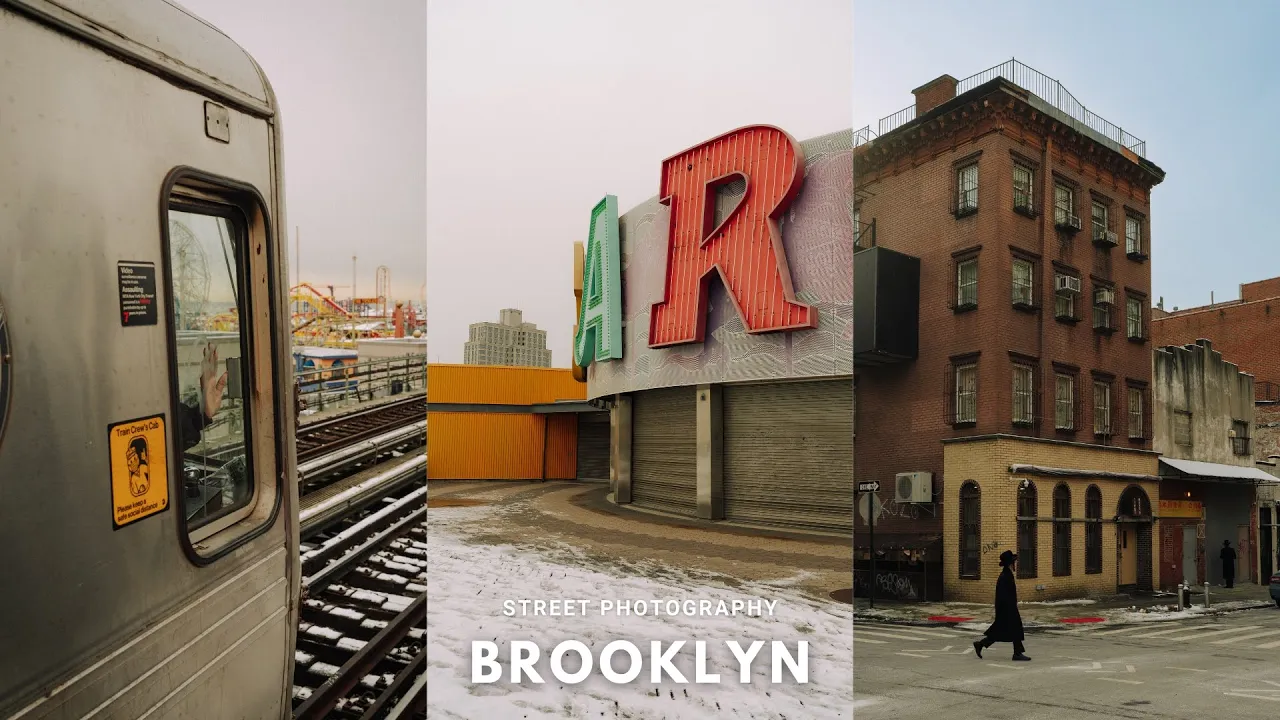
A few weeks before I made this, I had a really cool day of photography with my friend James Popsys at Coney Island in New York. We happened to be there in the dead of winter, and it had snowed the night before, which created this really lonely, isolated, almost dystopian vibe that worked perfectly for photography.
But I wanted to spice the day up a little. Over the years, one of my favorite things to do when I'm out shooting is put a creative limitation on myself. There are so many things to think about when taking photos, and sometimes a small creative limitation is enough to simplify the experience, make you more present, and help you improve at something you're struggling with.
So instead of shooting with a zoom lens like I usually do when I travel, I decided to shoot with only one lens: my favorite, the 35mm.
READ OR WATCH: This blog post is also available in video form! If you'd rather watch me explain this content, simply watch the video below. Otherwise you can find the text guide below. Just keep scrolling!
In Do this to get better at photography, you can follow James and me around Coney Island and Brooklyn in the snow.
Coney Island in the snow
James and I hopped on the train from Manhattan out to Coney Island, about an hour's trip, shooting a little on the way. Once we got there, we shot the theme park in the background with the train in the foreground, then made our way down to the beach where the park is.

Coney Island is a place I've wanted to photograph for as long as I can remember, and I always pictured it in the sun. So when we showed up and it was overcast with snow everywhere, it wasn't what I expected. But once I looked a little deeper, I realized this was exactly what I wanted to shoot. There were a few people walking around, not many, and having just that one subject in some of these shots really brought them to life.

I also really loved the colors in the signs out there. They just looked so cool against all that grey and white.

Zooming with your feet changes your perspective (and that's good)
One thing you hear a lot when you shoot with a prime lens is, "Just zoom with your feet." If you want a tighter shot, get closer to your subject. But there's a flaw in that thinking: when you get closer, your perspective changes.
I don't think that's always a bad thing. That change in perspective might be exactly what you need to capture a really interesting photo you wouldn't have seen otherwise. With a zoom lens, it's easy to get lazy about perspective. You just zoom in, instead of walking closer and around your subject looking for a different way to photograph it.
Here's an example from a skate park out there. If I shoot it wide and then zoom in, everything stays where it is. Nothing changes. But if I zoom with my feet and walk closer, I can see more of the skate park and get a completely different perspective on it. So zoom lenses and prime lenses aren't equal, and zooming with your feet isn't the same as zooming your lens. But it can be a really effective way to capture more creative photos. That's why prime lenses almost make you more creative.

It was dangerous out there. It snowed, then rained right after, and then everything froze over, so believe me when I say it was cold. But we kept finding things. In one shot, I loved the lines in the icy road. There's a lot of depth: the lines in the bottom left corner, the pothole on the right, and leading lines heading off to the right side of the frame.
There was also a playground I came back to, because it was so weird and interesting, and there's a person standing off to the right, which I think is really cool.

Williamsburg and the Brooklyn waterfront
After a few hours at Coney Island, we hopped back on the train to warm up and headed to Williamsburg in Brooklyn. It's a really cool place for photography, especially the Jewish neighborhood. There are a lot of people walking around who make amazing subjects, and the old buildings are really photogenic. I shot the overpass over the road when I got off the train, because the light looked really nice, and we walked around and shot some street photos.
I shot one portrait I really like. I can't show his face, because he asked me not to. He was a bus driver for one of the Jewish schools there, and when I asked if I could shoot his portrait, he said yes of course. I love the light spilling in.

Editing for the place. I edited most of the images from this day in a Portra 400 kind of film vibe. Coney Island looks vintage and a little weird, so I wanted to give it a rustic, vintage feel while still letting the colors pop, and I'm really happy with how the edits came out.
Where one lens held me back (and why that's fine)
After that portrait, we went down to the Brooklyn waterfront, where you can see the Manhattan skyline. Unfortunately, this is the kind of place I'd like to photograph in good light, and this is where I really ran into the limitations of the 35mm. The skyline is quite far away, and a slightly longer lens would have pulled it in.

But when I started this, I knew I'd miss shots. The more I grow as a photographer, the more I realize I don't have to capture every composition and every variation of every composition. When I go in with that mindset, I almost get stressed, because I feel like I have to shoot every scene every way, at every focal length, so I don't miss anything. Bringing just one lens lets me connect with an environment like nothing else. I missed some shots at the waterfront, but I still think I got some pretty cool photos.
How to use creative limitations to get better
This isn't just about shooting with one lens. It's about the bigger idea of putting creative limitations on yourself to get better at one specific thing. So many factors go into a good photo: subject matter, lighting, lens choice, aperture, shutter speed. When you're a beginner, it's hard to balance all of them. So sometimes it's nice to take a step back and focus on just one. A few ideas:
Shoot in auto and only look for beautiful light, or only look for color.
Shoot in aperture priority and focus on how aperture affects your image.
Limit yourself to one focal length, like me with the 35mm. You can do this with a zoom too. If you have a 24-70, lock it at 50 and shoot that way for a few hours.

There are so many limitations you can try, and they all lead to a simpler shooting experience that lets you focus on one piece of the photography process. I've found this so useful over the years, and I'd definitely recommend it if you feel like you're lacking in one particular skill. (For more ideas, here are the six tips that made my photos better.)
So, how do you get better at photography?
Pick one creative limitation and go shoot with it. It simplifies the experience, makes you more present, and helps you improve one skill at a time.
These are the days of photography I live for: heading out with a friend and photographing whatever we find, instead of going to a specific location to shoot a specific composition, which is how landscape photography sometimes feels to me. Just walking around, taking photos, making jokes and having a good time. If you want to see why 35mm is my one lens of choice, here's why I love the 35mm focal length, and for another snowy New York adventure, here's a snowy night of street photography in New York City.
Happy shooting!
Want to build your skills one piece at a time? My Photography Essentials course breaks the basics down so you can master each one, from light and composition to aperture and shutter speed.


Sean Dalton
Made with ☕ and a camera.