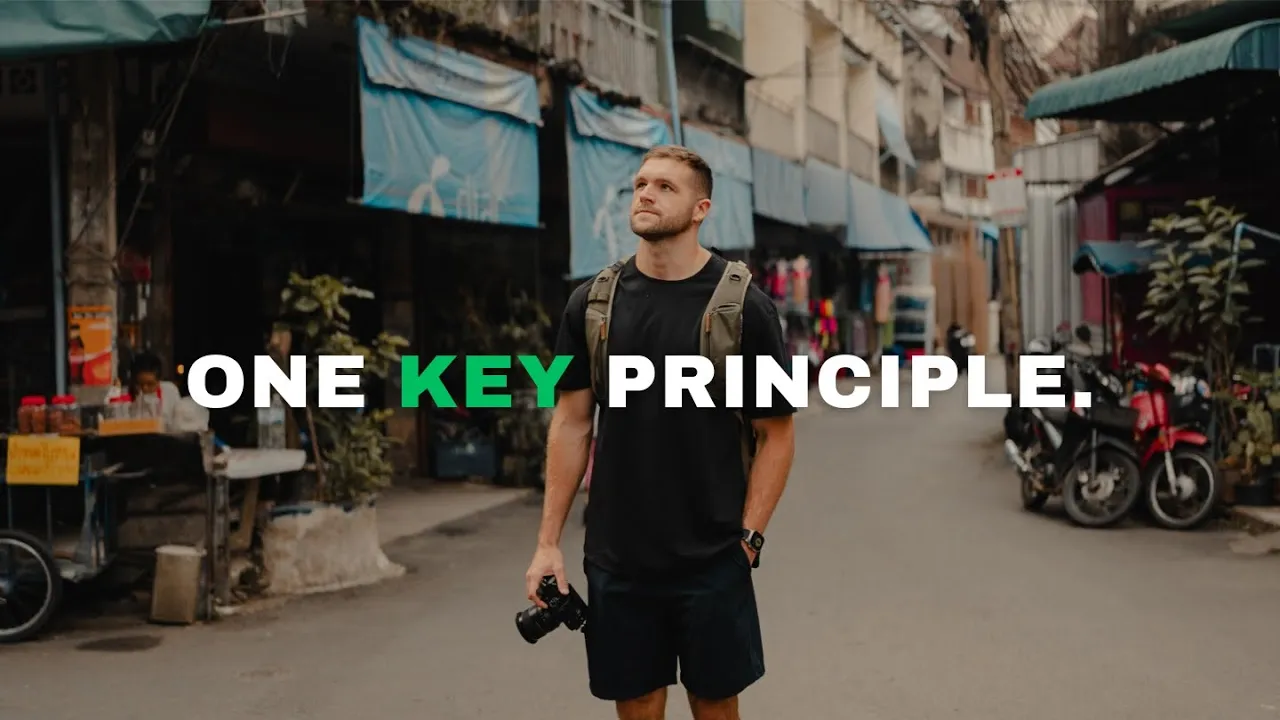
The Fastest Way to Start a Freelance Photography Business
Business
You don't need the best camera, a registered business or a big following to start a freelance photography business. You need your first client. Here's the fastest way I know to get there.
·
10 min read

There are a lot of misconceptions about how to start a freelance photography business, and a lot of up-and-coming photographers just aren't sure of the exact steps to take.
For those who don't know me, I'm Sean, and when I made this, I'd been a professional travel photographer for eight years, living between Bali and Thailand and traveling full-time through my photography. In my opinion, it's the best job in the world, and I'm excited you're embarking on your own adventure.
So in this post, I'm sharing the fastest way I know to start a photography business.
READ OR WATCH: This blog post is also available in video form! If you'd rather watch me explain this content, simply watch the video below. Otherwise you can find the text guide below. Just keep scrolling!
In The FASTEST way to start a freelance photography business, I walk through every step.
Start lean: all you need is your first client
A lot of videos about starting a photography business tell you that you need to do all these things first: register a business, get the best camera, get everything in place. I don't think that's true at all. I've always found the best way to start a business is to just start, and start lean.
There are a few things in this post you should have, but you don't need the best gear, you don't need to register as a business, and you don't need everything in order. You just need to score your first client. That's what this is about: getting clients in the door and building a portfolio so you can work with more clients in the future. If you just start, instead of waiting for every piece to be in place, you'll find success much faster. You can always build your business as you go.

1. Overcome feeling inadequate
I know this sounds basic, but I've worked with so many up-and-coming photographers, and almost all of them lacked confidence early on. The few who didn't went on to be really, really successful.
Look inward and think about what you feel when you imagine starting a photography business. Maybe you think your work isn't good enough, or you don't have the time, or your gear isn't good enough. The biggest one I see is a lack of confidence, and everybody deals with impostor syndrome, me included. When I was starting out, I hated my work, and it took a few friends to build my confidence up to the point where I could put myself out there.
If you don't think your work is good enough: I was making $8,000 to $10,000 a month shooting on a crop sensor camera. You don't need to be the best photographer in the world. You just need to be good enough, and you'll get better as you go.

2. Choose an ecosystem, not the best camera
A lot of people love to obsess over gear. It's important in the sense that it's a tool for capturing our creative vision, but it's certainly not everything. I had my first $10,000 month shooting on a Sony a6300 with a 50mm f/1.8 and a 35mm f/1.4. A super basic setup, not full frame, and it got the job done. Clients didn't know the difference, the photos looked really good, and because my marketing was good, I had a lot of clients coming in.

Shot on the Sony a6300 at f/1.8 with a 50mm lens.
So when you shop for gear, choose an ecosystem. Sony, Nikon and Canon are all amazing and more than suitable for professional work. If you're new and starting this as a side hustle, a crop sensor (APS-C) camera is much cheaper and more than capable of professional photos. Or pick up a secondhand full-frame camera, like a Sony A7 III, which is still incredible and gets you into the full-frame ecosystem so you can start building a solid kit of lenses. All you need is gear that's good enough. (Here's what I'd buy as beginner photography gear.)
3. Build your portfolio, and don't niche down (yet)
I know I'll get some hate for this, but I'm a firm believer that you don't need to pick a niche when you're starting out. Most photographers don't know what they want to shoot early on. The most important skill a photographer can have is versatility: shooting in a wide range of lighting, working with different kinds of models, handling all kinds of scenarios. The best way to build that is to shoot a lot of different things. If you pick one niche right away, it might not be profitable, and you might not even be interested in it in two years.
Instead, build multiple portfolios and send the relevant one to each client you reach out to. In my portfolio, I have a commercial section, a portrait section and a landscape section, because those are the three types of clients I work with most.

Build the site in 30 minutes. You can build a portfolio in about 30 minutes on a platform like Squarespace. (Not sponsored. I used them early in my career and still did when I made this.) There are a ton of YouTube tutorials that show you how.
No photos yet? Do spec shoots. A lot of young photographers think they don't have good photos to put in a portfolio. Luckily, you can build an insane portfolio in a matter of weeks with spec shoots, which are basically fake commercial shoots. Grab a product you like, some friends and a model, and shoot it as if it were a real commercial job. You'll get professional-looking images for your portfolio, and nobody needs to know you didn't actually work with that brand. This was massive for me early on.

Above all, you need to love the process of shooting and editing. Get out there, engage with your creativity and become obsessed with creating, and you'll walk away with really marketable photos.
4. Reach out to clients directly
One of the biggest misconceptions is that you need a big social media following to get clients. That couldn't be further from the truth. Most working photographers don't have a big following. You only see the ones who do because they're the loudest. Clients mainly come to you two ways: word of mouth and outreach.
Outreach means cold emailing or DMing brands on Instagram: offering your services, showing your work and offering value right off the bat. It works for a simple reason: you're putting your work and the value you offer directly in front of a target customer.
When I was starting out, I was living in Thailand and needed to go home to visit my family, but I also needed to make money while I was there. So I reached out to hundreds of cafes in Portland, San Francisco and New York, and scored $5,000 in jobs in about three weeks while I traveled. I call it my mass outreach strategy, and I still use it because it's so effective.

A few outreach tips for when you're starting out:
Focus on businesses with a marketing budget. Often that's product brands. Commercial work for product brands is one of the biggest earners for photographers, and there are a million brands on Instagram you can reach out to.
Match the brand to your portfolio. If your portfolio is full of watches, reach out to watch brands, not a brand selling diapers.
Write a good email. The biggest mistake I see is photographers talking about themselves way too much. Get to the point, briefly introduce yourself, and jump straight into the value you can provide that specific brand. It's ultimately a sales email, so communicate as much value as you can in that first message.
Work for free, early on. It's an incredible way to build your portfolio and get your foot in the door. I always wanted to work with DJI but couldn't get in, so I offered to work on a project for free. I shot the images and video, sent them over, they loved them, and when their next campaign came around, I got paid to be part of it. Key words: early on. You don't want to do this forever, because you need to make a living.
5. Set a base rate
A lot of photographers struggle with pricing. It's never fun, and it's something we keep working on throughout our careers. A base rate is exactly what it sounds like: the minimum you'll accept for a shoot. Early on that might be $250, $300 or $500. Further into your career, it might be $2,000 or $5,000.
It matters because it lets you immediately dismiss clients who aren't within your budget or worth your time, it gives you a general sense of what you should be earning, and it helps you quote each job. When you price your services, always quote higher than your base rate, so you can come down to meet the client's needs and make them feel like they're getting a deal. When I started, my base rate was $250. When I made this, I wouldn't go out on a shoot for less than $2,000, and that's a small shoot. So think about how much you want to earn and set your base rate.

6. Give clients a smooth experience
Once you have your portfolio, outreach and base rate in place, make sure you're giving clients a smooth experience. This really isn't that hard, but a lot of photographers aren't good at communicating or meeting their client's needs.
The most important thing you can do is communicate. Send more emails than you think you need, lay everything out in detail before the shoot, and make sure you fully understand what the client is looking for. That leads to happy clients, which leads to more clients through word of mouth. Like every service industry, if you take the weight off your customer and make it easy for them, they'll enjoy working with you.

A client management platform like Pixieset or ShootProof helps too. You can deliver photos in beautiful galleries, clients can select proofs, and you can sell prints from your store. But it's not necessary at the start. Don't pay for a monthly subscription before you have clients. Focus on your first few clients and add a service like this later.
7. Stay curious
The last step, and I think it's incredibly important for any business, is to stay curious. Keep learning how to give your clients a better service and how to capture better photos. Talk to other photographers, look at what they're doing, and ask them how they run their businesses. You can't go this alone, and it's amazing how much one small tip can revolutionize your business. I picked up so many little tidbits from the photographers I was hanging out and shooting with, and it massively helped my business in the long run.

So, how do you start a freelance photography business fast?
You don't need everything in place to start getting paid. If you have a decent camera, a few images for a portfolio and an email address, that's all you really need. Focus on getting started and scoring that first client so you can legitimize yourself as a professional photographer, then keep building your business as you go.
Starting out can be a grind. But my fondest memories as a professional photographer are from the very beginning: completely broke, living in Northern Thailand, having just quit my full-time job, living paycheck to paycheck and trying to make it work. It was stressful, but it was so much fun, and I honestly envy you for being at this first step. (Here's more on how I earn a living as a full-time travel photographer.)
Happy shooting!
Want photos good enough to get hired? My Photography Essentials course gives you a super solid foundation in the basics, so you can shoot with confidence for any client.


Sean Dalton
Made with ☕ and a camera.