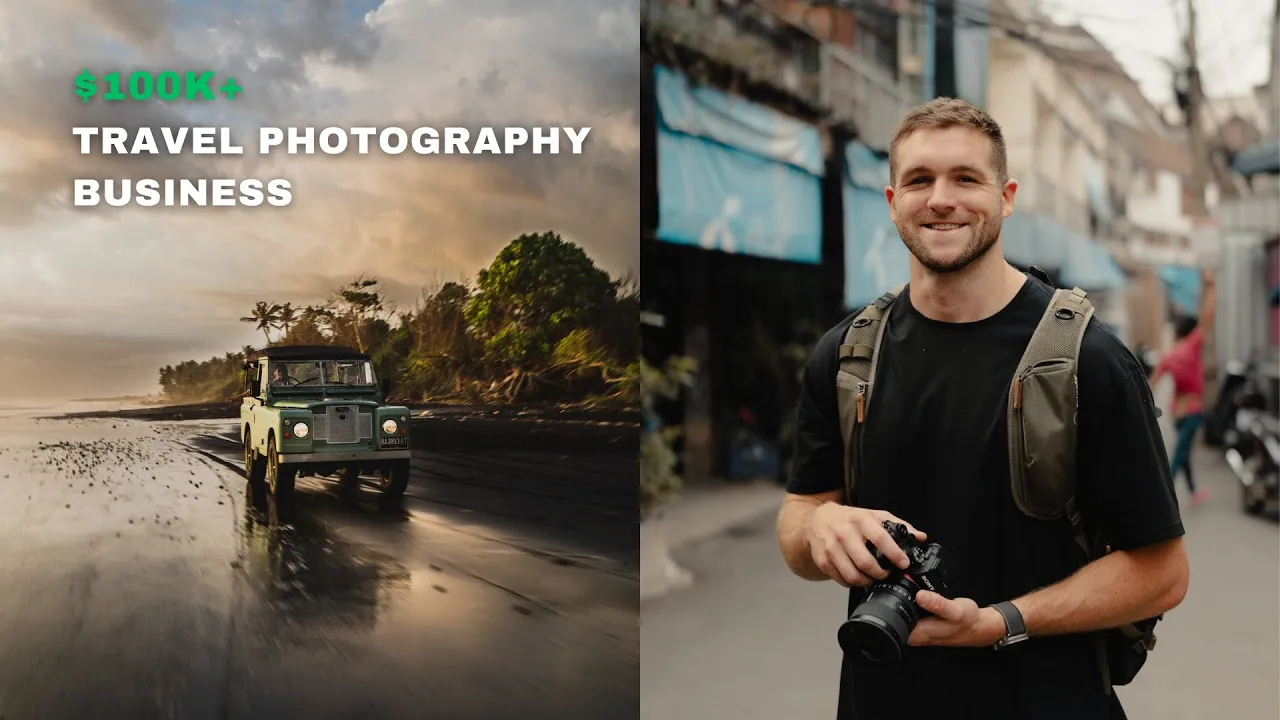
How I Earn a Living as a Full-Time Travel Photographer
Business
People often ask how I support myself traveling full-time through photography. Here's exactly how I earn a living as a travel photographer, and how you can start building the same kind of business.
·
10 min read

When I made this, I'd been living between Bali and Thailand for eight years. They're both beautiful places to live, and I just couldn't choose one, so I hopped between them. I went to Europe for a month every year, went home to visit my family in the US for a month every year, and supported all of it purely through my photography.
People often ask me, "Sean, how are you doing this? How can you sustain yourself through your photography?" It's a great question. So in this post, I'm breaking down exactly how I earn a living as a travel photographer, with tips on how to build these income streams yourself, so you can build a location-independent photography business too.
READ OR WATCH: This blog post is also available in video form! If you'd rather watch me explain this content, simply watch the video below. Otherwise you can find the text guide below. Just keep scrolling!
In How I Earn a Living as a Full-Time Travel Photographer, I walk through every one of my income streams.
Income stream 1: client work (30 to 50%)
Client work is selling your photography services to a client: capturing photos and video for them to use in advertising, on their website and so on.
Freelance work. When you're starting out, this is typically freelance work at the local level: portraits, weddings, restaurants and cafes. That's exactly what I did. I built a portrait and cafe/restaurant photography business in Northern Thailand. I found a market, did a lot of outreach, and figured out how to sustain myself through photography.

Commercial work. The other type of client work is commercial: shooting for higher-end brands with bigger budgets, usually with a team involved, a much more engaged process and very strict deliverables. It pays a lot more than typical freelance work. For the few years before I made this, my focus had been moving away from freelance and toward commercial work, so I could charge more per job, take far fewer jobs a year, and not stress about working a shoot every week.
At that point, client work made up about 30 to 50% of my income. I'd recently done a job with the Swiss tourism board, where I went to Switzerland and created a bunch of content for a week, which paid really well. I'd also done a commercial shoot for Anker and worked with DJI.

How I get client work. Two ways:
Word of mouth. People love to talk and share your name. Do a good job and it gets out into the world.
Pitching. I've been pitching since I started my business. I email or DM brands with a specific idea, something like, "I think this could be a really cool shoot for your brand, let's chat," and I express the value I can provide right in that first message.
One of the beauties of being a travel photographer, or living somewhere like Bali or Thailand, is that you can build those destinations into your pitch. "I'm living in Bali, and I have a creative idea I want to run by you. I think your product would look amazing shot on the beach here. Let's jump on a call." That's been amazing for landing higher-end clients. I do the same when I travel to Europe, pitching brands whose product would look great in that destination, and local businesses too: car rental companies, hotels, local brands. That way I can score jobs while I'm traveling.
Outreach works for a simple reason: you're putting your work and your services right in front of someone, offering value straight off the bat, which makes it hard for them to say no. (Here's how to get started with it in the fastest way to start a freelance photography business.)
Income stream 2: digital products (40 to 60%)
This one completely changed my life. Digital products are things like Lightroom presets, LUTs, online courses, guidebooks and travel guides. The list goes on.
What makes them so powerful for artists is that you're no longer trading your time for money. With client work, there's a direct trade between the two. With digital products, you create the product upfront and it sells on its own. That gives you more time to create the art you want to create, instead of only creating art for someone else.
Digital products revolutionized my business and my lifestyle. I have so much more time to make videos, shoot what I want to shoot, and not feel like I have to stick to whatever specific style a client is after. Most importantly, they gave me the freedom to travel and live wherever I want. When 100% of my income came from client work, I couldn't really leave where I lived. I could take time off and score the odd job while traveling, but generally I had to stay put to keep earning. Depending on the year, digital products make up about 40 to 60% of my income.
I sold my first digital product back in 2017, a preset pack, and I think I sold about $30 worth that first year. Honestly, it wasn't very good. Since then, I've spent a lot of time learning how to create better products and how to market them, which is arguably even more important. You can create the dopest product in the world, but if nobody sees it, you won't earn anything from it. Since then, I've created much better preset packs, technical photography courses like my Lightroom Masterclass, and photography guides.

How to start selling digital products:
Realize you're capable enough. A lot of creatives are scared to sell anything because they don't feel like an expert. Everyone has impostor syndrome. Back in 2017, when I was so hesitant to release my first product, a friend told me: if you're better than somebody else, you're good enough to teach them. You can solve a problem for someone else. That really hit home, and it gave me the confidence to put it out there.
Set up a simple store. You can set up an online store in under an hour on a platform like Squarespace. That's what I did. There's no better feeling than selling your first digital product and tasting that freedom.
Get over sales shame. A lot of creators are afraid to market themselves, yet they'll advertise for any big brand for a couple hundred bucks. I think that's disrespectful to yourself and to your customer. If you've made something genuinely valuable and you don't market it, you're doing yourself a disservice, and you're doing your customer a disservice by not giving them the information they need to make an informed decision. Selling isn't bad. You're helping people decide, and showing your own hard work some respect.
Collect email addresses now. Even if you have no plans to sell a product yet, set up a website with an option to join your email list. An email list is so much more profitable than a social media account, and it's a great way to connect with people. I send out a free weekly newsletter with photography tips and whatever interests me, and I love sitting down to write. The sooner you start, the better set up you'll be when you release that first product.
Income stream 3: affiliates and sponsorships (5 to 10%)
Affiliate revenue means selling a product on behalf of a brand. If someone clicks a camera link in a YouTube description and buys it, you get a kickback. A lot of software companies do this too.
Sponsorships are different. That's when a brand pays you to market for them, like a camera brand paying you to talk about a new camera on your channel or post about it on Instagram. I'd consider that influencer work.

Between the two, this was about 5 to 10% of my income, and it was growing as my channel grew and sponsors started paying better. But I don't think it's as powerful as digital products or client work, especially when you're starting out, because unless you have a really large following, it won't be that lucrative.
One of the biggest mistakes I see young creators make is branding themselves as an influencer first and selling marketing services to brands. If you brand yourself as a content creator, photographer or videographer and charge for the content itself, you can earn a lot more. So early on, focus on creating high-quality content that brands post on their own accounts and websites or use in their advertising, rather than content to advertise on your own Instagram or YouTube.
What hasn't paid much (for me)
Photo licensing. I licensed a photo to Adobe for their app and website, which paid pretty well, and I used to license travel images to magazines. But it's never been a major earner. Don't go seeking it out. When licensing opportunities come to you, they're a nice bonus.
Prints. I've made some money on prints, but I don't think they're a sustainable income for travel photographers. If you shoot weddings or portraits and can systemize print upsells after a shoot, that could be great. But for my kind of jobs, it's not relevant, and the print market is quite small.

Photo books. Nobody knows I released a photo book, because I did a really quiet release. I made it back in 2021 for my family and friends at a slight markup to cover my costs. Holding my images in my hands was amazing, and I'm excited to make more, but I don't think books are a good earner for most photographers. They're an amazing form of creative expression, though.
Stock photography. Everyone loves the idea of true passive income: post photos online and earn money while you sleep. Unfortunately, the market is heavily saturated. The people making money have huge collections across many platforms and shoot very specific things for stock sites. I've made maybe $1,000 over the years, and I don't think it's worth your time if you're just starting out.
How to build a hybrid photography business like this
When a lot of people hear all this, they think they need to start client work, launch a digital product and do everything at once, and it overwhelms them. So here's a simple path:

Score clients in your local area. Grab a camera. It doesn't need to be expensive; a crop sensor camera under $1,000 is fine. Go out and shoot as much as you can.
Build a small, targeted portfolio. Put together images relevant to one target industry. Coffee shops and restaurants are a great first target, or portraits and pre-wedding shoots in your area. Put it on a simple website.
Reach out. Contact those businesses and offer your services. It builds your portfolio, teaches you the client process and makes you a better photographer. If you don't feel good enough yet, score your first client and learn as you go.
Share the journey on social media. YouTube is a gold mine for creatives, and Instagram is great too. Don't treat it like a business at first. Treat it as a creative outlet to share work you love. Social media isn't a great way to land clients early on, but it can turn into an amazing income source later.
Start collecting emails as soon as possible, and share your thoughts with that list every week.
So, how do travel photographers make money?
For me, it's a mix: client work for 30 to 50%, digital products for 40 to 60%, and affiliates and sponsorships for 5 to 10%, with licensing, prints and books as small bonuses. I love this job. Being able to travel, create and meet so many cool people, from creatives to models to the people I work with, is so much fun, and it's a really fun community to be part of. I hope you join us.
Happy shooting!
Starting your own travel photography journey? My free Travel Photographer's Toolkit has the resources, essential apps and gear list I use as a full-time travel photographer.


Sean Dalton
Made with ☕ and a camera.