OM System OM-3 Review: My New Everyday Carry Camera
Gear
I've been carrying the OM System OM-3 every time I leave the house. Here's what I love about it, the Micro Four Thirds question, and who this little camera is for.
·
8 min read

One thing I've learned over the years that's really stuck with me is that sometimes the best photos you shoot are the ones you don't plan for. The unexpected shots. The small in-between moments most people would walk right past, but you notice them and capture them in a beautiful way.
A lot of the time, those moments happen when you least expect them: getting coffee with a friend in the morning, or on an afternoon walk around your neighborhood. That's exactly why I started carrying a small personal camera every time I leave the house, something I can throw in my bag that takes great photos, to document my life and capture little scenes when I'm out and about.
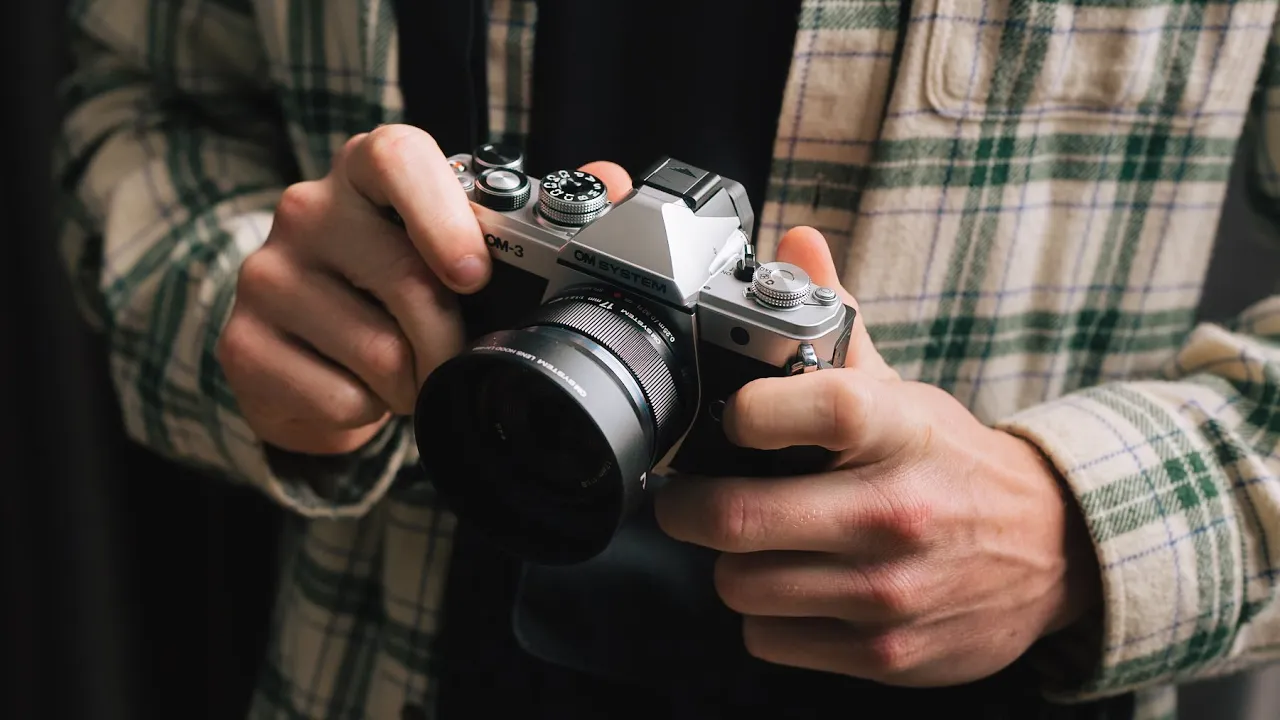
For the last few weeks, that camera has been the OM System OM-3. It looks beautiful, with a gorgeous, timeless design, but it's also incredibly functional and incredibly tiny. So in this OM System OM-3 review, I'm sharing my experience shooting with it in Northern Thailand, what I like, what I don't, and who I think this camera is for.
Quick disclaimer: OM System sponsored the video this post is based on, but everything here is my honest experience shooting with the camera.
READ OR WATCH: This blog post is also available in video form! If you'd rather watch me explain this content, simply watch the video below. Otherwise you can find the text guide below. Just keep scrolling!
In My New Everyday Carry Camera, OM-3, I share a ton of the photos I shot with it around Northern Thailand.
What I need from an everyday camera
At the very top of my list, an everyday camera needs to be small and compact, and it needs to look good so I'll actually take it everywhere. I'm not going to head out with a giant Sony every time I go for an afternoon walk. If that's you, totally fine. But I want something that stays out of the way, fits in my bag and looks cool. (Here's why carrying an everyday camera is one of the best ways to get better at photography.)
The OM-3 is definitely that camera. It's absolutely gorgeous, with a beautiful aluminum design. It's very well made and feels solid in the hand, but it weighs less than 500 grams, so it doesn't get in your way. I throw it in the little bag I carry every day, and it doesn't even feel like it's there.

Classic design without sacrificing usability
A lot of cameras chase that classic, timeless design and neglect the actual functionality. What I love about the OM-3 is that you get the design without sacrificing usability.

There's a dial on top to switch between photo, video and S&Q mode, a bunch of custom modes, a dedicated record button, and several dials for changing your shutter speed and aperture. That's one thing I really didn't like about the Fuji X100V: it's just not practical to shoot in full manual. With the OM-3, you can, because all of those dials are right there and functional.
It's also weather sealed, with an IP53 rating, so you can take it out in the rain or snow. As long as you're not completely submerging it, it'll be fine in most scenarios, which is exactly what you want from a camera you take everywhere without worrying about it.
And while it's perfect as an everyday shooter in a city, especially with the 17mm f/1.8, you could put a long telephoto zoom on it and have a very capable wildlife or landscape camera too. I took it out to shoot some landscapes in Northern Thailand, and I was super stoked with some of the photos I got of the buffalo out in the countryside.
The creative dial and great JPEGs
One of my favorite features, and something incredibly important to me in an everyday camera, is JPEGs that look good straight out of camera. I don't want to edit RAW files every time I go out for a photo walk on a random Tuesday afternoon.
The OM-3 has a creative dial on the front that switches between several modes that style your JPEGs in camera.
Mono. Four black and white profiles, which you can customize even further: curves, the brightness of specific colors, and film grain.
Color. My personal favorite. It gives you four color presets you can edit and customize to get the perfect look for your style. I played around for a few days and dialed in a style I absolutely love straight out of camera, with warm highlights, deep blacks and soft highlights. You can customize the saturation of each main color, adjust the curves in camera, add a vignette, and change the sharpness and contrast. I spent some time dialing in this recipe, and I think the photos look fantastic, not just for street photography (which is mostly what I shot), but also for the landscapes I shot in nature. They definitely fit the style of my photography.

Art. These are pretty creative, pretty crazy-looking edits. For me they felt a little too strong, and probably not something I'd use, though they might come in handy sometimes. There are also creative frames that make your photo look like a scanned film photo, which might be cool for some people.

The creative dial is a major selling point for me, because I can essentially edit my images before I take them. I dial in my recipe, go out, shoot, and the images are ready to share, without diving into RAW editing on a camera I just want to have fun with.
The Micro Four Thirds sensor
Now for the elephant in the room: the OM-3 has a Micro Four Thirds sensor. It's absolutely tiny, especially compared to one of my full-frame Sonys. The difference in physical size is massive, and that was my main concern when I picked it up. I'd never really shot Micro Four Thirds before, and I was worried the image quality would be severely lacking.
Yes, if you zoom in to 500% and compare it to a full-frame photo, you'll notice less detail. But in 99% of scenarios, you really don't notice the loss of resolution. And there are some real benefits.
Deeper depth of field. You get an incredibly deep depth of field without having to stop down to f/8 or f/11 like on full frame. Shooting between f/4 and f/5.6 on the OM-3 gave me nice, sharp focus from the front of the frame to the back. That's something I've been doing a lot more over the last few years. Instead of taking the easy way out and shooting wide open at f/1.8 to blur the background, I'm trying to bring the scene into the composition, with secondary subjects and context.
A smaller camera. That small sensor is what lets the camera be so compact, and I'd argue a small, compact everyday camera matters much more than maximum resolution.
So the sensor really hasn't put me off. As long as I'm not pixel peeping, I don't notice a huge difference between these photos and my full-frame photos. They're 20 megapixels, they're beautiful, they're more than good enough for social media, and you can print them too.

A flagship in disguise
For me, everything above is what matters most in an everyday camera. I want it to take good photos, be fun to shoot with, and be quick and small. The OM-3 hits all of that. But it's also a flagship in disguise, with a lot more features that make it an incredibly powerful camera, beyond just shooting random photos of trash cans like I've been doing.
Computational photography. There's a button on the back that switches between a few computational modes, all done in camera. There's a Live ND filter that goes up to 32 stops, which you can use for long exposures. There's also a graduated ND filter, which I'd never seen in a camera before. If you're shooting a high-contrast scene and want to darken the sky while keeping the foreground and midground well exposed, you drag the graduated filter down over the sky and get a nice balanced exposure. I used it when I was shooting those buffalo, and got some really cool images.
HDR and high-res modes. There's an HDR mode, plus a high-resolution mode that lets you shoot 50 megapixel photos handheld, or 80 megapixel photos on a tripod, if you want more resolution.
Video. Personally, I don't think I'd use video on a camera like this much. I just want a simple, fun everyday shooter. But it shoots up to 4K 60 frames per second in 10-bit log, which I thought looked really nice and was easy to grade, and it has a flip screen, so you could absolutely use it for B-roll or as a video camera.

Who is the OM System OM-3 for?
I think OM System set out to make a cool little camera that can compete with something like the Fuji X100V, while keeping a ton of functionality, so it's a legitimate photography tool and not just a toy you throw in your bag.

At launch, the OM-3 retailed for $2,000, and the 17mm f/1.8 lens for $549. That's a lot of money for a camera like this. But if you look past the timeless film design at what it can actually do, it's incredibly capable. It'll keep up with you whatever you're doing. You can use it as an everyday camera like I do, to document your life, or as a legitimate expedition camera. You could take it to Antarctica and it would keep up.
I love that versatility: a camera that looks good but is also highly functional. I'm a big fan, and I'll definitely be using it as my everyday personal camera for the foreseeable future. If you have questions, or you're curious what I think about it after more time, let me know in the comments on the video. And if you're weighing up other everyday cameras, here's my take on the Fuji X100VI as a travel camera.
Happy shooting!


Sean Dalton
Made with ☕ and a camera.