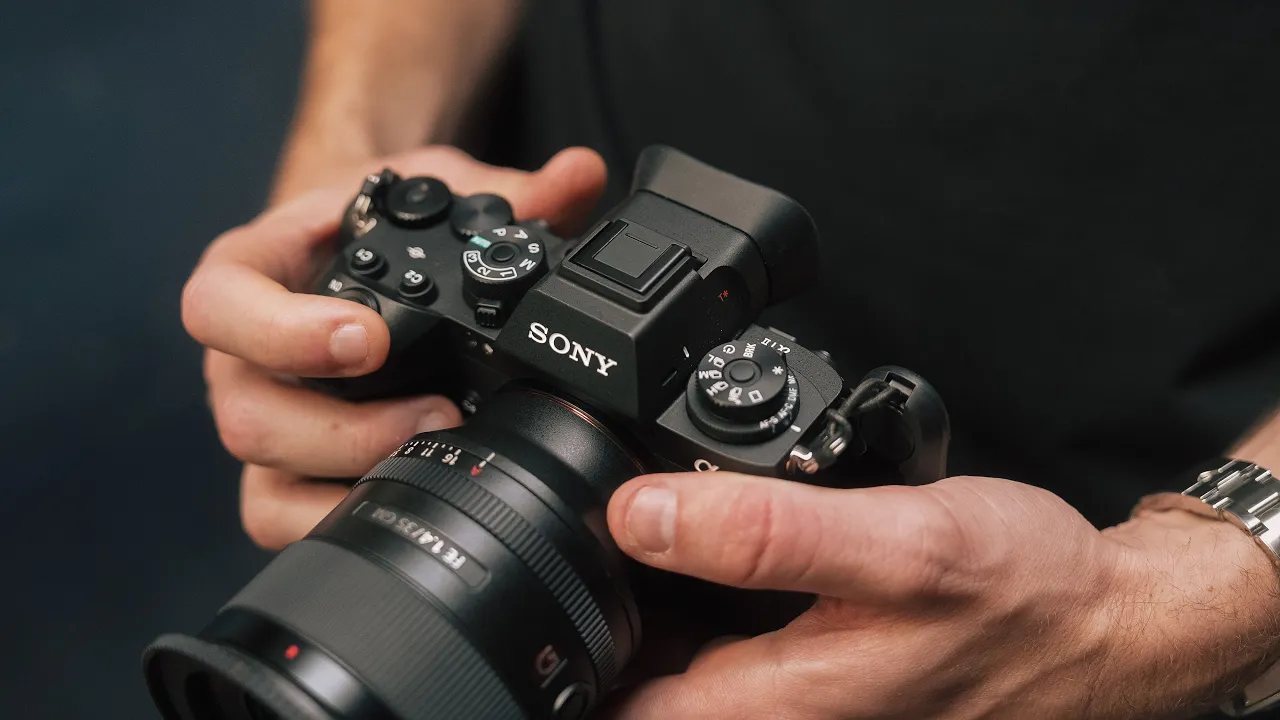
Sony A1 II Review: Why I Spent $6,500 on This Camera
Gear
$6,500 is a lot to spend on a camera body. Here's why I upgraded to the Sony A1 II, what blew me away, and why I don't think it's the best camera for most people.
·
10 min read

$6,500. That's what I spent on this camera, and that's just the body, not including the lens. That's a lot of money to spend on a camera. But there are a few reasons I decided to upgrade to the Sony A1 II.
So in this Sony A1 II review, I want to talk about why I think it's the perfect camera for me, share my experience shooting with it so far, and also explain why I don't think it's the best camera for most people out there.
READ OR WATCH: This blog post is also available in video form! If you'd rather watch me explain this content, simply watch the video below. Otherwise you can find the text guide below. Just keep scrolling!
In This Camera is Ridiculously Good, I share my first impressions of the A1 II shooting street photography in Bangkok and Chiang Mai.
Why I upgraded to the Sony A1 II
I've been a Sony shooter for almost 10 years, and I'm deeply embedded in the ecosystem. I have a ton of lenses and a few different bodies. And I've always been the photographer who goes out with a ton of gear: a giant backpack with a 70-200, a 24-70, a 16-35, you name it, because I never wanted to miss a shot.

But as I've grown as a photographer, one thing I value more than anything is carrying less gear. There's less to worry about, and you're not fiddling around trying to capture every variation of a shot when you can often do it with one camera and one lens. (Here's more on that in my travel photography gear.)
The problem was, I still had to bring two cameras to get the quality I was after: the Sony A7 IV for photography, and the Sony A7S III for video. Both are fantastic cameras. The A7 IV shoots great photos and great video, but it really fell short in certain situations, especially with anything moving very quickly. The rolling shutter was horrendous, and I really noticed it shooting fast-moving trains in Japan. The A7S III, on the other hand, is one of the best video cameras out there, but for photography, it fell short.
So I had to bring both, until I got the Sony A1 II, which is a hybrid camera beast. It's incredible for photos and incredible for video, which means I can carry one camera whether I'm traveling through Europe or Asia or going back home to the US, and know I'm not compromising on photo or video.
First impressions
Coming from someone who mainly shot on the A7 IV, this thing is absolutely insane. It's incredibly fast, it's quiet, the electronic shutter completely blows my mind, and the quality of the photos and videos I'm getting is next to none. But most importantly, it's an absolute blast to shoot with. I've been shooting mostly street photography in Bangkok and Chiang Mai, documenting scenes and shooting a little video here and there, and I've really enjoyed it.

The body and build
The body is basically identical to the A9 III (a camera I've never held, so I can't tell you anything about it), and I really like the upgrades.
The flip screen. This is the main one, and it's such a massive upgrade coming from the A7 IV. I missed being able to shoot from the hip so much on that camera. Yes, you can pull the A7 IV screen out to the side and it kind of works, but it's a hassle. Being able to easily flip this screen out, while still being able to see myself when I'm recording, is a massive game changer for both photography and video. I'm so happy they finally added it to the A1 series.

The grip and dials. It has a deeper grip than the older generation, which is nice, but not something I care about all that much. There are also upgraded dials on top. Honestly, I don't really use them. I'm used to going through the menu, and I'm not a sports photographer, so I don't switch drive modes much. I usually stick to the low drive mode. And I never change my autofocus mode: I always shoot in continuous autofocus with back button focus.
The speed boost button. Again, I'm not a sports photographer, but I found this really useful shooting street in Bangkok. I was in a small alleyway with a little road at the end, and motorbikes were driving past super quickly. I could hear them coming, but I didn't know exactly when they'd appear in the gap. Shooting at 30 frames per second, I knew I wasn't going to miss them. You'll end up with a lot more photos, but I tend to shoot quite quickly on the street, moving around and shooting from the hip, so I'll definitely use it.
The electronic shutter
From a photography perspective, this is where the camera really starts to shine. The first thing I noticed when I picked it up was how crazy the electronic shutter is.
You basically can't shoot with the electronic shutter on any of the A7 series cameras. With no movement in your scene, it's fine. But with any artificial lights or any movement, the image falls apart very quickly. On the A1 II, there's basically no rolling shutter. There's hardly any difference between the electronic and mechanical shutter. That's new to me, and it's been a bit of a learning curve, because I don't have that nice mechanical shutter feel I'm used to. But it feels like a completely different camera, and it's been a joy to use.

The autofocus
The thing that's really blown me away is the autofocus. On the A7 IV, or any modern A7 camera, autofocus is great and super fast, but it's not necessarily smart. The new AI autofocus on the A1 II has completely changed the way I use autofocus.
On the A7 IV, I almost always used a small autofocus point. I'd point it at my subject, use back button autofocus to lock focus, then press the shutter. The issue was when a subject was moving and ended up in a part of the frame where that point wasn't. The A7 IV has good tracking, but it doesn't come close to the A1 II.
On the A1 II, I set my focus area to tracking: spot small. Combined with back button autofocus, you get the same feel as a small autofocus point, plus tracking when you need it. With a moving subject, I put that small point on them, hold the back button, and recompose, and the camera doesn't lose focus unless it's a super complicated scene.
So far, that tracking spot has been incredibly sticky. I've been shooting people on motorbikes, animals and cars, and almost every time, as long as I held the back button, the camera stayed locked on. That alone is a huge upgrade over the A7 IV for me. I don't want to think about focusing my camera. I choose Sony because it doesn't get in the way of my creativity, and the A1 II takes that to the next level.

Image quality
The sensor is the same as the original Sony A1: a 50 megapixel stacked sensor that's incredibly fast. Apparently it has improved dynamic range and more, but honestly, I'm not a pixel peeper. I just want the camera to work and the photos to look good, and I've been super impressed. I've been editing Sony files for years and feel like I understand them well. Compared to my A7 IV files, these look a little better and a little sharper. I was happy with the A7 IV, but I can definitely feel this is a big upgrade.

Video
I didn't choose this camera just for photos. For me, video is equally important. If you're only a photographer, this camera probably isn't the best camera for you. But if you're a hybrid shooter whose business depends on both photo and video, and you want to do it all in one body, it's an amazing camera for that.
I shoot just as much video as photos these days, for YouTube and for client work, and the video from this camera is so good that I sold my A7S III. In my opinion, the A1 II is a better video camera, partly because of the much improved autofocus, and partly because the image quality looks a little better too (Gerald Undone did a comparison, and the A1 II came out slightly ahead).
8K. It shoots 8K too, which I probably won't use much. Maybe in the mountains, if something is far away and I want to crop in. But 8K means much bigger files that are harder to edit, so I'm happy with 4K.
Dual native ISO. Some of you might be thinking, "Sean, the A7S III's dual native ISO is 12,800, and the A1 II's is way lower." And you'd be right: in extreme low light, the A7S III is better. But I'm rarely shooting in extreme low light. I'm much more likely to be around ISO 4,000 to 8,000 for video, and the A7S III has a lot more grain at those ISOs, so you have to go up to 12,800 for it to clean up, and sometimes I don't want to stop down my aperture to account for all that extra light. So for me, the A1 II is more useful in the majority of situations.

Is the Sony A1 II worth $6,500?
I said at the start that this camera isn't for everyone, and I genuinely believe that.

If you're primarily a photographer, get a Sony A7R V.
If you're a hobbyist who wants a good camera for photo and video without spending all that much, get the Sony A7 IV or its successor.
If you're a video shooter, get the Sony A7S III or an FX3. They're fantastic video cameras.
The A1 II isn't the best photo camera and it isn't the best video camera, but it's the best hybrid camera on the market. As someone who wants to carry one camera while traveling and shoot great photos and great video, it can't be beat.
Since the A1 II came out, the original A1 has dropped by around $1,000, and it's even cheaper used, which I'd highly recommend if you're considering it. So is the A1 II really worth a few thousand dollars more? It comes down to whether you want the improved screen and the improved autofocus, because those are really the only major upgrades over the original A1. For me, I'm happy to pay a few thousand extra for the screen alone, and I absolutely adore the autofocus. As someone running a creative business full-time, with clients and YouTube and constant content, this camera is a no-brainer for taking my business to the next level.
So, should you buy the Sony A1 II?
It's right for me, but it's not right for everybody, and $6,500 is a lot to pay for a camera. If you're a hybrid shooter who wants one body that does it all, I don't think there's a better option. If you mostly shoot one or the other, there are better ways to spend that money.
I'm really stoked to shoot with it more, with portrait shoots planned in Bali and a trip to Europe later this year. If you have any questions about it, drop them in the comments on the video. And if you're more interested in a smaller everyday camera, here's my OM System OM-3 review.
Happy shooting!
Want to get the most out of your Sony files? My Lightroom Masterclass has over five hours of super detailed editing lessons, breaking down not only how to use every single slider in Lightroom, but why you'd make each adjustment to your photos.


Sean Dalton
Made with ☕ and a camera.